

Table of Content
- 1 The Top 5 Vertical Jump Programs in 2026
- 2 #1 Vert Shock
- 3 #2 Jump Manual
- 4 #3 Vert Code Elite
- 5 #4 BoingVert
- 6 #5 Bounce Kit
- 7 Programs to Avoid
- 8 Programs That Didn’t Make the Cut
- 8.1 Overtime Athletes Elite Vertical Academy
- 8.2 PPA Elite Remote Training
- 8.3 THP Strength
- 8.4 Nathanael Morton Vertical Jump Programs
- 8.5 The Lost Breed Flight School
- 8.6 Nick Briz Vertical Jump Program
- 8.7 Knees Over Toes Guy Vertical Jump Program (ATG)
- 8.8 Jump Attack by Tim Grover
- 8.9 Vertical Jump for Ballers by Chris Staples
- 9 Which Vertical Jump Program Is Right for You?
Want to dunk a basketball but still can’t quite touch the rim?
You’re in the right place.
I’ve broken down the five best vertical jump programs available in 2026—
looking at what they promise, what they actually deliver, and whether they’re worth your time and money.
Whether you’re 13 or 18, this guide is built for you.
Let’s be honest…
Dunking is one of the coolest things you can do on a basketball court.
And if you’re a teenager who’s been grinding away, jumping as high as you can every day and still not getting there, it can feel super frustrating.
The good news?
Your vertical jump is very trainable.
Studies have shown that structured plyometric and strength training can increase your vertical jump by 8–15 inches over just a few months.
The bad news?
Not all programs are built the same.
Some are outdated, some are just plain dangerous, and some are genuinely excellent.
I’ve researched, tested, and ranked the five best vertical jump programs in 2026.
Each program is judged based on scientific backing, real-world results, ease of use, safety, and value.
Let’s jump in.
The Top 5 Vertical Jump Programs in 2026
-
Vert Shock Best overall · Beginner-friendly
-
Jump Manual Best for advanced athletes · Balanced training
-
Vert Code Elite Best for elite athletes · Long-term
-
BoingVert Best injury prevention program
-
Bounce Kit Best for advanced athletes · Strength-focused
Key Differences Between the Programs
| Program | Price | Duration | Equipment | Avg. Reported Gains | Best For |
|---|---|---|---|---|---|
| Vert Shock | $67 | 8 weeks | None | 6–8" | Beginners wanting fast results |
| Jump Manual | $97 | 12 weeks | Gym required | 6–12" | Advanced athletes, Balanced training |
| Vert Code Elite | $275 | 1 year | Gym required | 6–15" | Elite athletes, Long-term |
| BoingVert | $27 | 8 weeks | None | 4–7" | Injury prevention, Beginners on a budget |
| Bounce Kit | $77 | 12 weeks | Gym required | 5–9" | Advanced athletes, Strength-focused |
#1 Vert Shock
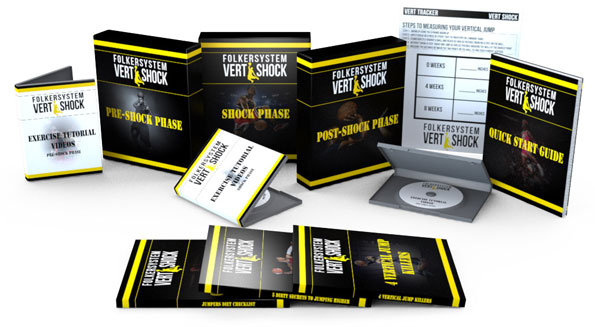
When it comes to vertical jump training in 2026, Vert Shock is still the gold standard.

Created by former professional player Adam Folker and celebrity dunker Justin “Jus Fly” Darlington, Vert Shock has helped thousands of athletes around the world increase their vertical.
It uses a training method called post-activation potentiation (PAP), which essentially “shocks” your fast-twitch muscle fibers to fire more explosively.
Vert Shock is 100% bodyweight-based, so it doesn’t require a gym, weights, or any fancy equipment — just your body, some space, and real commitment.
The workouts are challenging but well-explained, and there’s a members-only community where you can track your progress and get motivated by other athletes.
The program consists of 3 different phases — Pre-Shock, Shock, and Post-Shock, over a total of 8 weeks.
It has been used by athletes in over 78 countries.
Most users report a 6–8 inch increase after completing the program.
Pros
- No gym or equipment needed: All bodyweight training that can be done almost anywhere.
- Well-structured: Scientifically structured 3-phase system with a clear roadmap from start to finish.
- Easy to follow: Provides a clear, simple, step-by-step workout plan that helps you gradually improve.
- Beginner-friendly: The exercises are easy to learn and include clear video demonstrations.
- Short workouts: Short daily sessions that fit busy schedules.
- Fast results: Many users report noticeable gains within 4 weeks.
- Affordable: At just $67, Vert Shock is considerably more affordable than other programs on the market.
- Money-back guarantee: 60-day, no-questions-asked refund policy.
Cons
- High intensity: The Shock phase is very intense and can be overwhelming if recovery is not taken care of.
- Exaggerated marketing claims: Guaranteed 9–15″ gains is unrealistic for most. The vast majority land in the 6–8″ range.
- Repetitive: The exercises can feel monotonous.
- Focuses mostly on legs: Limited upper-body and core development.
- No strength component: For advanced athletes who already have high verticals (30″+), the lack of weight training can lead to plateau.
- Limited “why”: Lacks scientific explanation for the exercises and why you’re doing the things you’re doing.
Verdict:
Despite its over-hyped and aggressive marketing claims, Vert Shock is a legitimate, well-structured program that genuinely delivers results.
The realistic expectation, however, is 6–8 inches of gain in 8 weeks, not the marketed 9–15.
It is highly effective for beginners to intermediate jumpers looking for a straightforward, home-based routine.
But it won’t teach you the deep science of jump training, and eventually you’ll need to graduate to a more advanced program like Jump Manual or Vert Code Elite.
But for the price, the accessibility, and the speed of results – Vert Shock remains one of the most popular and effective entry-level vertical jump programs available.
Bottom Line:
If you’re a beginner and you’re looking for a proven, no-gym-needed jump program that actually delivers — Vert Shock should be your first stop.
#2 Jump Manual
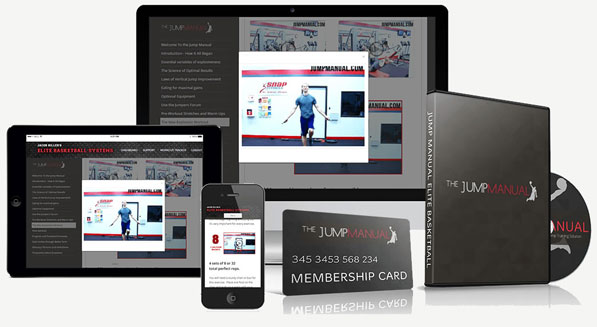
If Vert Shock is the crowd favorite, the Jump Manual by Jacob Hiller is the deep-diver’s program.

This isn’t a quick-fix system—
It’s a comprehensive, science-heavy training manual that covers every single factor that goes into improving your vertical jump—
From strength and power to nutrition, flexibility, and mental focus.
The Jump Manual has been around since 2008 and is still one of the most respected programs in the vertical jump world.
Why?
Because it doesn’t just tell you what to do—
It explains the why behind every exercise, which helps you understand your body and train smarter.
The program includes gym-based workouts, so you’ll need access to weights and equipment.
This makes it better suited for advanced athletes who have a solid foundation of training and weight lifting experience.
The personalized coaching support from Jacob Hiller is a standout feature that most programs don’t offer.
Pros
- Comprehensive training: One of the most comprehensive jump programs ever made — covers strength, nutrition, flexibility, recovery, etc..
- Support: Includes one-on-one coaching support from the creator, Jacob Hiller himself.
- Technique focused: Includes detailed guides on proper jumping form.
- Injury prevention: Slower pacing and strength focus can be easier on joints than some high-impact programs.
- High educational value: Provides in-depth scientific explanations that you keep long after finishing. Helps you gain a deep understanding of training fundamentals, not just follow exercises.
Cons
- Requires gym: Weights, squat rack, and equipment are essential — not optional.
- Not beginner-friendly: Heavy lifts require prior technique knowledge to avoid injury.
- Time commitment: Requires significantly more time per session compared to other programs.
- Steep learning curve: The sheer amount of content can be overwhelming when just starting out.
- Outdated interface: The website design and video quality are considered old and low-resolution.
- Slower gains: Progress tends to be slower than shock-based programs.
Comparison: Jump Manual vs. Vert Shock
- Jump Manual: Focuses on strength and quickness more equally. Takes longer to see results because building muscle mass takes time, but builds a higher overall “ceiling” for jump height.
- Vert Shock: Focuses only on plyometrics and quickness. Generally produces faster results and doesn’t require a gym, but can be harder on the joints.
Compared to Vert Shock, which focus more on quick, bodyweight-based plyometrics, Jump Manual is viewed as a more complete, strength-focused system for long-term gains.
Verdict:
The Jump Manual is best suited for advanced-level athletes looking to add real, lasting inches to their vertical.
The program demands strict discipline, a significant time commitment, and regular access to a gym.
Prior lifting experience is also recommended, as the exercises’ intensity and complexity can be difficult and potentially risky to navigate without a baseline foundation.
Bottom Line:
If you’re a beginner or don’t have gym access, Vert Shock is the easier on-ramp.
If you’re an experienced athlete who wants one of the most complete and science-backed programs available — and you’re willing to put in 12 weeks of disciplined, gym-based work — the Jump Manual is hard to beat.
#3 Vert Code Elite
Vert Code Elite is the newer, more modern answer to vertical jump training, and it’s quickly earned a strong reputation among serious athletes who want the most up-to-date, sport-science-driven approach available.
Created by Coach Paul Fabritz of PJF Performance, the program draws on current research in athletic performance and periodization training to maximize your jump gains.
What sets Vert Code Elite apart is its use of periodization — which means your training is broken into 12 strategic phases that build on each other over time.
Rather than hammering the same exercises week after week, the program smartly cycles intensity and volume to keep your body adapting and improving.
Unlike “quick-fix” programs that only use plyometrics, VCE uses a comprehensive approach based on Paul Fabritz’s “Explosion Pyramid,” which focuses on building a foundation of strength before layering on high-speed explosive power.
The periodized training model alternates between strength, power, and speed phases — which mirrors how elite-level college and professional athletes train.
This approach reduces injury risk while maximizing long-term vertical gains.
The program is “drip-fed,” meaning you unlock one 4-week phase at a time to ensure you don’t skip foundational steps.
A typical week consists of 5–6 working days and 1–2 days off.
Pros
- Professional-level training: Based on modern sport science and periodization principles used by elite-level athletes.
- Injury prevention: Excellent injury prevention protocols built into every phase of the training.
- Excellent presentation: High-quality instructional videos with clear, detailed coaching cues throughout.
- Superb jump mechanics: Detailed quality guides on proper technique for both one-foot and two-foot jumping.
- Recovery & nutrition: Scientifically backed protocols to help your body adapt to the high workload.
- All-around athleticism: Enhances overall athleticism beyond just jumping.
Cons
- Not beginner-friendly: More technical and complex than most programs — not for beginners.
- High cost: At $275, VCE is significantly more expensive than other programs.
- Requires gym: Fully-equipped gym with weights is mandatory.
- Extremely long: The 12-month period can feel too long for athletes seeking fast results.
- Slow results: Results take longer to appear as the periodized structure builds slowly over time.
- Lack of upper body: The program focuses almost exclusively on lower body.
- Time-intensive: Workouts are long (sometimes 90+ minutes) and require 5–6 days a week.
- Diminishing returns: Some users reported significant gains in the first 3–4 months but saw plateaus in later months.
Verdict:
Vert Code Elite is one of the most technically rigorous, comprehensively designed vertical jump programs on the market.
It’s best suited for athletes who already have a solid gym foundation, can commit to a full year, and want a methodical, science-based path to serious gains.
Bottom Line:
If you already have a high vertical (35″+), are serious about long-term growth, and want to improve your overall basketball athleticism, Vert Code Elite is likely the best choice.
However, if you are a beginner or are still establishing your vertical (20–35″), you should try other programs before getting into this one.
#4 BoingVert
BoingVert is a brand that has been in the jump training space since 2011.
It was created by two well-respected names in the athletic performance world — Shawn Myszka and Kelly Baggett, who is also the author of the Vertical Jump Bible.
Up until recently, BoingVert’s website was an absolute mess with about 20 different programs and confusing sales copy.
Currently, the vertical jump program they’re actively selling is the BEAST program, which is their main program.
Of all the vertical jump programs on the market, BoingVert has the boldest claims.
When you visit their website their headline says:
“Gain up to 15 inches in 8 weeks*” (with an asterisk of course)
Hate to break it to you, but I don’t see how a bodyweight-only program can do that in 8 weeks.
They also claim on their website that the average gain across all their programs is 10.3 inches.
I’m almost certain this is inflated—
There are many testimonials on their site claiming 5–6 inch gains, and not a single credible testimonial of someone gaining 10 inches or more.
So even BoingVert’s own curated success stories — the best-case examples they chose to display don’t get close to 15 inches.
Let me sum it up by saying BoingVert’s marketing is very questionable, to say the least.
Pros
- Comprehensive: Covers major jump factors – strength, speed, nutrition and reactivity.
- Science-based: Built on legit training principles.
- Low cost: Very affordable, often cited as a budget alternative compared to other programs.
- Strong focus on injury prevention: Eases in super slowly to minimize risk of injury.
- Good for people with knee pain: The gradual overload makes it ideal for those with jumper’s knee or patellar tendonitis.
- Educates, not just trains: Offers extensive knowledge and theory on the science and philosophy of jumping.
Cons
- Too slow: Other programs achieve similar gains in much less time.
- Misleading marketing: 15 inches in 8 weeks is an unrealistic claim.
- Poor structure / Messy layout: Information is scattered and disorganized. Requires switching between many PDFs and videos, making it hard to follow.
- High complexity: Can be too complex and overwhelming for beginners who just want simple instructions.
- Dated presentation: The program interface and overall design seem dated compared to modern programs.
- Moderate time commitment: Not the quickest workouts.
- No upper-body work: Upper body training is not included. You’d need to buy an additional program separately if you want upper body work.
Verdict:
BoingVert isn’t a bad program, but it’s not the best option for efficient or advanced training.
It’s overly complex and poorly packaged for most people.
The claim of gaining 15 inches in 8 weeks is unreliable, to put it mildly.
It’s virtually impossible for most people to gain that much in such a short period of time — especially for trained athletes.
In truth, you can expect to gain about 4-7 inches, and eventually you will need to follow it up with a more advanced program to fully maximize your vertical.
BoingVert shines for:
- People with leg/knee problems (jumper’s knee, patellar tendonitis)
- People recovering from an injury
- Younger athletes (13 and under)
But for most people, both beginners and advanced, Vert Shock and Jump Manual are easier, faster, and more practical.
Bottom Line:
If you have the budget, Vert Shock at $67 is a meaningfully better investment for most.
But if $27 is your ceiling and you’re a beginner without gym access, BoingVert is far from the worst place to start.
#5 Bounce Kit
Jordan Kilganon is hard to argue with.
The man has a 50-inch vertical, has performed some of the most jaw-dropping dunks ever recorded, and is widely considered the greatest dunker of this era.
So when he launched Bounce Kit, his 12-week jump training program, it made sense that people got excited.
The problem is —
Being an elite dunker and being an effective trainer are two very different things.
And Bounce Kit, unfortunately, highlights that gap pretty clearly.
Bounce Kit costs $77 but delivers what most reviewers describe as the bare minimum for a complete vertical jump program —
There’s no mention of form, no scientific context, and the “bonus” content offers little more than tips you could find for free online.
The program is split into 3 phases, moving from heavy strength training in weeks 1–4, to a mix of strength and explosiveness in weeks 5–8, and finally a plyometric-focused approach in weeks 9–12.
Pros
- Program dashboard: One of the cleanest, best-organized layouts of any vertical jump program available.
- Video quality: High-quality demonstrations — Jordan explains each movement clearly.
- Upper-body training: Dedicated upper-body day — rare among jump programs and great for overall athleticism.
- Lower-body strength: Excellent routine that targets all the key muscle groups involved in jumping.
- Warm-up routine: Solid preparation that gets your muscles ready and helps reduce the risk of injury.
Cons
- Training imbalance: Overemphasizes strength training at the expense of plyometrics, slowing explosive gains.
- Session length: Can run up to two hours, making it one of the most time-consuming programs on the market.
- Complexity: Requires frequent 1-rep max calculations and on-the-spot decisions, making it confusing—especially for beginners.
- Plyometric quality: Plyometric exercises are too basic to efficiently convert strength into explosive power.
- Stretching protocol: Mentions stretching but provides zero guidance on which stretches to actually do post-workout.
- Not suitable for in-season: High fatigue from heavy lifting makes it unsuitable during season.
Verdict:
Bounce Kit is not for everyone.
It throws you into the deep end right away.
There’s no gradual warm-up phase, no introductory theory guide, and no alternative exercises if you can’t access a gym.
The jump workouts can often feel repetitive, with large volumes of the same approach jumps repeated across many sets.
And the Facebook group, which promises direct access to Kilganon, has been mostly inactive.
Nonetheless, for an experienced athlete who’s already comfortable in the weight room and wants an intense, strength-based program with no fluff, Bounce Kit is a decent program.
Bottom Line:
If you’re willing to do a lot of your own research and fill in the gaps yourself, Bounce Kit can produce some results — but there are significantly better options at the same price.
Programs to Avoid
Not every vertical jump program out there is worth your time — and some can actually set you back or even get you injured.
Here’s one program that you should steer clear of in 2026:
Air Alert — Why You Should Skip It
Air Alert has been floating around the internet since the early 2000s, and at first glance, it might seem like a free and easy shortcut to a higher vertical.
But the truth is –
Air Alert is one of the worst and most outdated jump programs in history —
And it has caused a lot of knee and tendon injuries in young athletes over the years.
The program is built almost entirely on high-volume calf raises and basic jumping movements, performed at extreme frequency with very little rest between sessions.
While the idea of “more is better” sounds appealing, it’s completely wrong when it comes to vertical jump training.
Your muscles need recovery time to grow stronger — overloading them daily just leads to overuse injuries.
The program was designed decades ago, before we had a proper understanding of sports science and athletic recovery.
It has no progressive overload structure, no periodization, and no regard for injury prevention.
Simply put, it’s not worth the risk.
Pros
- Free: It’s completely free and easily accessible online — there’s no cost barrier to entry.
- Can improve endurance: The high number of repetitions does make for a good cardio workout.
Cons
- Extremely high risk of injury: High daily training volume with almost no rest days dramatically increases risk of knee/shin injuries.
- Outdated: Completely outdated methodology with no foundation in modern sports science or jump physics.
- Time-consuming: Workouts take too long — impossible to combine with basketball season.
- Wrong training focus: Trains for endurance, not explosiveness.
- Poor results: Volume is too high, leading to fatigue rather than explosive gains.
Verdict:
Being free doesn’t make something valuable.
Your knees and tendons are too important to risk on a program that has been repeatedly discredited by coaches and sports medicine professionals.
Bottom Line:
Avoid Air Alert if you care about long-term performance and joint health
There are far better, safer options available today.
Programs That Didn’t Make the Cut
Narrowing this list down to five wasn’t easy…
I tested and researched dozens of vertical jump programs to get here, and honestly, several of them are still worth your time depending on your goals, budget, or training history.
Here’s a quick rundown of the other notable programs I looked at, and why they landed just outside the top 5.
Overtime Athletes Elite Vertical Academy
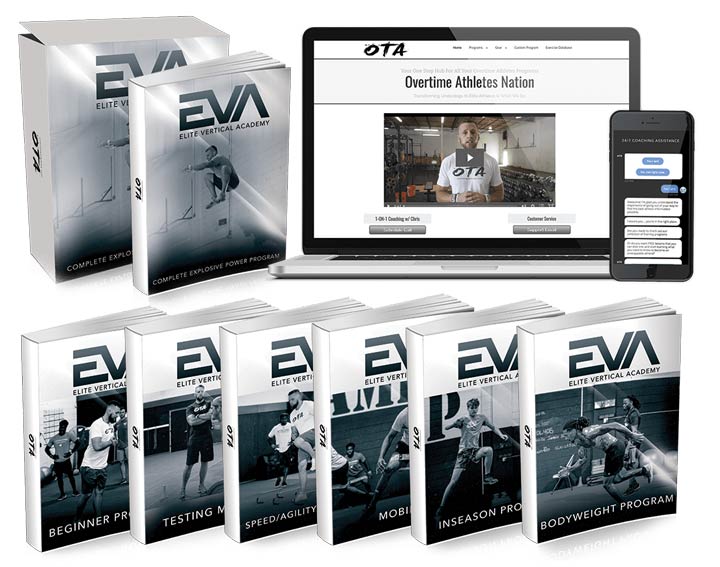
Chris Barnard’s Elite Vertical Academy (EVA) is a 16-week program built around isometrics and a “4-step” progression, with both a bodyweight and gym-based track.
It’s genuinely well-rounded, and I like that it teaches the science behind the training.
Honestly, it’s solid enough to rank if it weren’t for the crowded field. Worth a look if the top 5 don’t fit your budget or goals.
PPA Elite Remote Training

Run by Coach Chase Skinkis and Coach Tyler Ray, PPA’s Elite Remote Training pairs you with real coaches who review your lifts and jump technique on video.
I’ve seen how valuable that direct feedback can be.
The catch is the price tag.
It’s genuinely excellent coaching, but it’s a bigger investment than most beginners need to get started.
THP Strength
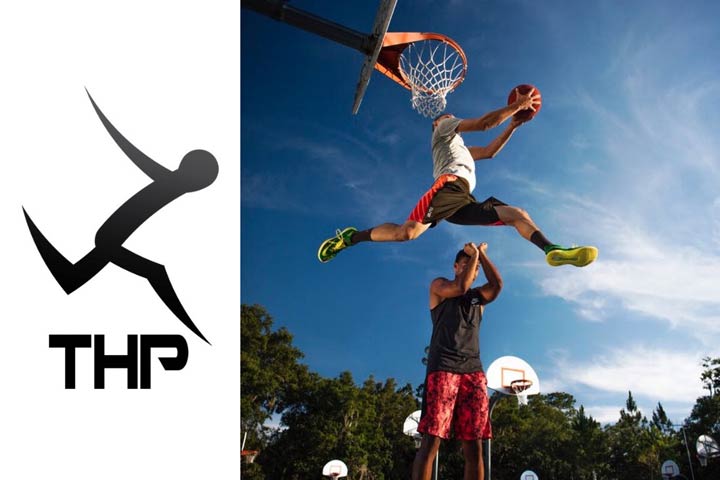
Isaiah Rivera and John Evans built THP Strength around fully customized programming and an unusually active coaching community.
It’s arguably the most personalized option on the market. However, it’s also seriously expensive, starting at $150 monthly, and how much true customization goes into each plan is honestly hard to verify.
Great for committed athletes with money to spend.
Nathanael Morton Vertical Jump Programs
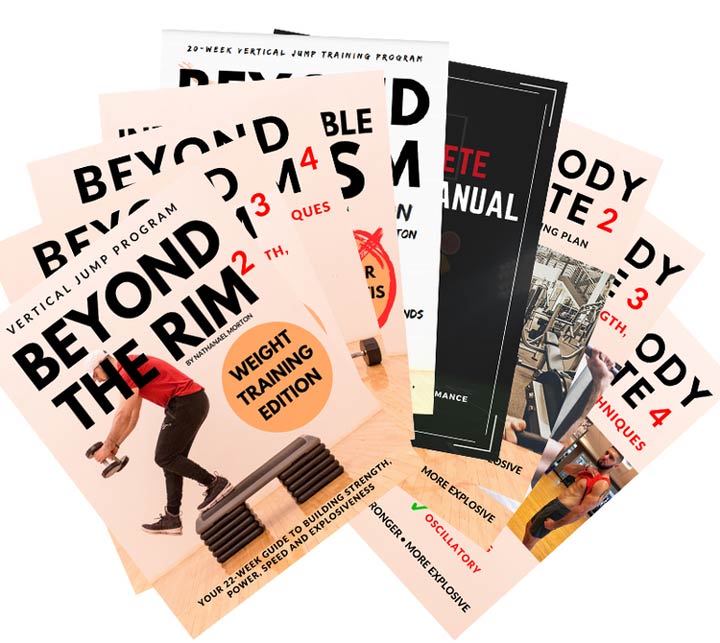
Nathanael Morton’s Beyond The Rim series covers bodyweight and weighted training with a clear focus on knee health.
His coaching knowledge is legit, and the programs are more modern than older options like Air Alert.
My issue is you’ll often need to buy multiple $75 programs just to get full-body training, which adds up quickly.
The Lost Breed Flight School

Flight School is an 8-week plyometric program from dunk influencer Anthony Lugo.
The exercise selection is actually thoughtful, but the presentation feels rushed, and there’s zero upper-body work included.
It also skips a deload week, which isn’t ideal for younger athletes.
It’s affordable, but you’ll find better-structured programs for close to the same price.
Nick Briz Vertical Jump Program
Nick Briz is known for his jaw-dropping one-foot dunks, but his $67 program doesn’t reflect that expertise.
It’s thin on structure, leaves sets and scheduling up to you, and a chunk of the content is just dunk highlight videos.
If you’re chasing one-foot jumping specifically, you’re better off elsewhere.
Knees Over Toes Guy Vertical Jump Program (ATG)
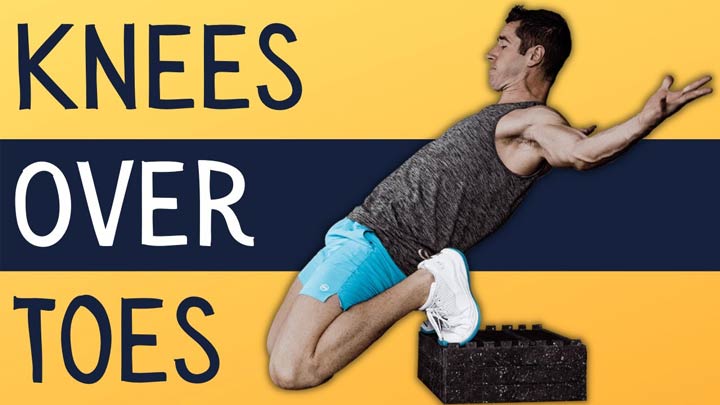
Ben Patrick’s ATG system isn’t really a jumping program first, it’s a knee-health system that happens to build a strong vertical along the way.
If you’ve dealt with jumper’s knee or tendon pain, it’s excellent. But it’s pricier than most programs here, and pure vertical gains take a back seat to joint health.
Jump Attack by Tim Grover
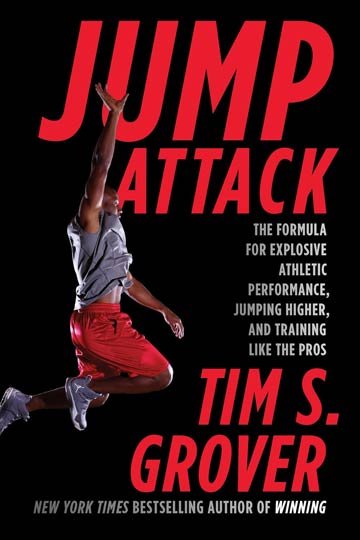
Tim Grover trained Michael Jordan, and Jump Attack is his 12-week, three-phase system built for all-around explosiveness, not just vertical inches.
It’s a legit old-school classic.
My honest take is it’s better suited to advanced athletes chasing complete athleticism than beginners who just want to add quick inches to their leap.
Vertical Jump for Ballers by Chris Staples
Chris Staples built his reputation as one of the most explosive one-foot dunkers around, and this program leans into his personal training style.
It’s a solid option if his approach resonates with you.
That said, information on the program’s actual structure is pretty limited compared to the bigger names on this list.
Final Verdict
Which Vertical Jump Program Is Right for You?
Here’s the bottom line:
The best vertical jump program is the one you’ll actually commit to.
But choosing the right starting point matters — especially if you’re a teen and your body is still developing.
Here’s a quick cheat sheet to help you decide:
- Most beginner athletes wanting fast results: Go with Vert Shock — it’s the best all-around program.
- Advanced athletes with gym access: Consider the Jump Manual for a comprehensive approach.
- Elite athletes looking for long-term, balanced program: Try Vert Code Elite for a modern, periodized approach.
- Injury-conscious athletes: BoingVert is a decent compromise.
- Advanced athletes who just want to focus on strength: Go with Bounce Kit.
- Everyone: Avoid Air Alert — it’s not worth the injury risk.
Whatever program you choose, remember that consistency is everything.
No program in the world will help you dunk if you skip workouts and don’t take your recovery seriously.
If you sleep well, eat enough, and train smart, you’ll be dunking sooner than you think.
Now the only question is — which program are you starting?
You might also like...
 Vert Shock Review – Does It Really Work? FULL Program Breakdown
- Bounce Kit Review – Why Jordan Kilganon’s Jump Program Is Far from Perfect!
- The Jump Manual Review – The TRUTH About This Program & My Results
- Boingvert Review – How the Program Works and Why It’s NOT so Great!
- How a 5’5″ Player Trained Himself to Dunk
- Basketball Shoes That Make You Jump Higher – Why It’s Total BS!
- Do Strength Shoes and Jumpsoles Really Increase Your Vertical Jump?
- Air Alert (1, 2, 3 & 4) Program Review – WARNING! Stay Away!






I bought jump manual last week and I’m on my 4th day and I just have a few questions to clear some confusion and give me some motivation that I can dunk lol.
1. Results- will I feel the results or feel “light” or will I have to measure my vertical weekly?
2. Nutrition- I just wanted to know if you drank the 3-5 protein shakes everyday, because it seems like a lot to me and it’s really expensive.
Thank you for time and I really like your blog.
Hey Peter,
That’s the spirit, deciding to do it is the first step, now you just gotta make it happen.
As for what you’ve asked:
1) I recommend measuring weekly or bi-weekly because gains are sometimes very small from workout to workout and they’re also subject to other things like adequate recovery and proper warmup so it’s really better to measure this at these intervals. Eventually when you add everything up then you see results and also from a motivational standpoint you don’t want to measure yourself every workout.
2) Yes, I did use whey but that’s also because of my busy schedule (job, family etc..) and sometimes I just don’t have the time to eat so I take the protein and it gives me the calories I need but I have no problem with it as I trained in gyms a lot in the past and I’m used to taking supplements. But if you have the time to get your meals set and eat enough to reach your daily caloric needs then you don’t have to use supplements. I use them simply because it’s more comfortable for me and fits more into my hectic lifestyle.
Hey Jesse. I’m 12 and I’m 5″1. I was wondering if any of these would work for me and if so which one. I can touch the net on a ten foot rim and I hope I can grab it after these programs. Please help me achieve my goal!!! I was researching both of these and I wanted to know if these would be effective on 12 year old boys also?
Yes, it would still work even at your age. You’re still a long way from dunking but your goal is very much realistic and don’t forget that it’ll help you with other things like speed and quickness too.
Can vertshock be done repeatedly once the 8 weeks are over ?
Yes, you can do it more than once, but take a 1-2 weeks break before you restart.
Jesse. Have you ever tried Tim Grover’s Jump Attack program? I’m just curious. I’ve been doing it for 2 weeks now. He’s trained NBA athletes like Michael Jordan, Kobe Bryant, and Dwayne Wade on their explosiveness and athleticism. I’d like to see a review of it if you ever do try it to see how it compares to these two programs.
Hello Jesse i want to be able to dunk i been doing the Jump Manuel for 3 weeks now and I have to admit I am jumping higher.
I could touch the rim before now i’m grabbing it with 2 hands on a good jump.
I saw your dunks and I was very impressed i’m 6 feet even also and I would love to dunk like you one day. My goal is to be able to do 360 dunk.
How long did it take to get that dunk? Was it within your first 12 weeks of the program or some time after it? Also how many times have you done the program. Please respond i’m very curious. Have a blessed day!
Hey Frank,
Sorry for the delayed response, just got back from vacation but thanks for the feedback, it’s always nice to see that people acknowledge your accomplishment.
As for the program I’m not gonna lie to you but it took me almost 7 months to get to this level.
Most of my gains were in the first 3 months and after that I just kept doing the program (I took the personal coaching package with Jacob) but with some tweaks and different settings which allowed me to gain another 5-6 inches and get to my 40 inch goal.
I was able to dunk after about 2 months of training with the program.
My biggest setback was the recovering issue and I think if I was to put more emphasis on that my progress would have been even faster but I’m still satisfied with my results nevertheless.
I think you’re progress so far is good as you’re saying you can grab the rim with both hands so if you keep training right you should expect to be able to dunk in a month or so.
Hey Jesse, I have a question, between Jump Manual and Vert Shock which one would you recommend for a faster result in the shortest time? I’m currently 6’2, I could grab the rim with both hands with one leg but not that often.
For faster results go with vert shock, it’s overall faster than the jump manual but I like the jump manual because I had issues with my knees and ankles so I preferred to go the slower and safer route.
That’s not to say that vert shock isn’t safe but anytime you go for speed of results you sacrifice safety to a certain degree, that’s just a choice you make…I’m over 30 and because of my history with injuries I preferred to err on the side of caution, but if your young and your body is in good condition then there’s nothing stopping from going with vert shock.
Hi, i am 24 and for the past month and a half I have been doing a certain routine to improve my vertical jump, so far I have increased my vertical jump by about three inches. The routine is squats, calve raises, and hamstring and quadriceps extensions. The squats are one to two warmup sets and then three heavy sets of five reps each. The extensions and calve raisers are three to four sets of at least twelve reps. If anyone plans on doing this I would also recommend someone to spot you on the squats. Anyways I was wondering if higher reps and less weight on the squats would be better for increasing my jump faster. Oh and I am doing this training for basketball by the way. I will definitely start doing the lunges box jumps and power cleans though. Thanks!
It’s good to mix in heavy lifting for structural integrity and strengthening your ligaments but heavy lifting alone is not enough to become an explosive athlete and there are other factors that also need to be incorporated in to your routine.
I’m 16 and I can already grab rim with one hand.also I have a pair of jumpsoles which help me a lot would u consider getting the jump Manuel or vert shock
Hey Josh, if you don’t have any past injuries or issues with your legs then go with vert shock, it will give you faster results and it’s generally better for young players.
What do you think about the new program “BoingVert”?
We haven’t tested it yet but I might check it out.
Is boingvert good?
For the vertshock other than the initial cost, is there any other things you need to buy to do the exercises?
No, you don’t need any equipment or accessories with vertshock.
I’m 5″9 and can nearly touch the ring, I’m 13 and I was wondering if I’m to young to start this program
Yes you’re old enough to start and you’re better off doing vertshock as it’s more suitable for players your age and there’s no weight lifting involved.
Hi, I´m 14 years old (gonna make 15 this year), 5´7 and can almost touch the rim. Is it better for me to use vertshock or jumpmanual?
For your age go with vertshock.
I live in Portugal, is there any problem with the obtainment of this program?
Just a couple questions:
Is this program all about plyometrics and is it 100% safe to trust my credit card nuber?
If you’re referring to vertshock then yes, it is indeed mostly advanced plyometrics techniques and they are very reputable so you can definitely trust them with your credit card.
Ans as for the first question, no, you don’t need anything special equipment with this program.
Hi jesse, just a couple question oh which program would suite me more. Im 21 in the middle of my basketball season looking to increase my vert and some extra training which one would work better with out over exhausting my body before games..
I think vertshock would work better for you as it’s a less demanding training regimen. Plus, 21 is still very young, if I was 21 I would have no problem withstanding the fast paced training and all the high impact exercises it has.
Hey Jesse, I have a lot of questions… I am thinking about starting one of those programs right after summer is over and my school starts again. I am 16 years old 5’9″, I was 5’7″ at the beginning of the school year but I grew 2 inches over this time. I think I will start to grow rapidly again during summer till my next year school starts again ( I currently have school ). I have done weight lifting and can squat 2.4x my body weight. My basketball season doesn’t start till late December so I have time to do either one of those program. Can I take protein shake once a day? Can I work on my upper body and abs during one of those programs? Which program will give me the best results, I wanna dunk before my season starts. If The Jump Manual includes using weight room the entire week then I have a problem because the weight room in my school opens from Monday-Friday. I haven’t really done any strengthing workouts for my legs but I can touch the rim already and I am pretty fast and quick. Do you think I will be able to achieve my goal before my basketball season starts? Which program do you specifically recommend for me? I am going to start another program after my basketball season ends and my goal is 48″ vertical before next summer (Summer of 2016) and The NBA. Thank you for your time!
That’s a serious goal man, 48″ is not that easy to come by, get ready for grinding!
But I like your energy, you look very hungry and I love that.
As for your height, these jump programs will help boost your growth and as a result you might grow very rapidly this summer, huge plus!!!
Since you’re already doing some weight training I would suggest you to begin first with vertshock and see if you can handle that. You’ll probably need to make some adjustments but what’s good about this program is that it leaves a lot of room for play and you can keep doing a lot of the stuff you’re currently doing.
Once you reach 40″ you’ll need to step it up a notch and manage this thing very strictly, that’s where jumpmanual can come into play since it’s a more “robust” program and it’s more equipped to help you avoid injuries when you reach that high level of athleticism.
But right now if you want to see fast results start with vertshock, work your way up to that 40″ and then figure out how to attack this from another angle.
Hope that helps,
now go do some damage!
Hey Jesse. As a basketball player I’m always trying to naturally grow taller. You said something about these programs boosting height and I know I did some vert shock program and then that same summer I grew 5 inches(also slept for 12 hours a day). Do you think that vert shock helped my growth at all?
Without a doubt. Any high impact activity (especially jumping) creates a mechanical load on the legs and spine and releases a chain reaction of pathways that are responsible for growing taller. It’s not without a reason that basketball players are tall, it’s due to all the high jumping they do that continuously signals these pathways that the body needs to grow.
This is why I always tell teenagers there’s no better time to start training your vertical because it’s a short window that will close once they reach the age of 18 (approximately) and won’t be able to grow more.
Did you get your vertical up?
Yep, restored a few inches and then some.
Sorry but I forgot a couple of questions. Does the order of which program I use matter and Let’s say If I used vertshock then I gained massive amount of vertical, does that mean If I use The Jump Manual after vertshock decrease the amount of vertical that one can gain from The Jump Manual. Thank you once again for your time!
I was in the same boat as you about six months ago. I actually read a personal review about vert shock program and it seemed like the person had great success using the program so I gave it a try. I couldn’t have been more excited about the results, as my vertical jump increased by 6 inches than when I first started using it.
Hey I’m 13 and I can touch the net and I’m a few inches away from the bar I go to the gym every week for 5 days and I look up dunking workouts but I don’t know which one is the best I deadlift and box Jump and back squat and that stuff is that good for helping my vertical jump
Not sure what the question here but I can tell you already that you’re training wrong, your routine is too focused on weight training and that’s not the way to go. Weight training is important but it’s only part of the equation and there are other things you should be doin’ too.
I suggest you get a decent program such as the ones mentioned here and follow those, it’ll save you all the trouble of trying to figure out everything yourself and you’ll be focused more on taking action instead of trying to “crack” the formula.
For Vert Shock, do you have to take any protein shakes or supplements? Also, in the pre shock phase, did you see good results? And about how any rest days are there?
Yeah I used protein shakes but that’s not compulsory, although it is recommended to take them after your workouts. Most of my gains were actually in the shock phase but I gained about 2 inches I believe in the first week. The rest days are according to the program about 2 days a week.
You guys should check out a new jump program by jordan kilganon its, called bounce kit.
Hi Jesse, I wanted to ask which program gives you an higher jumping result? Vertshock sounds better for me(17 yo, 6’1″) but my final goal is to jump as high as possible.
Well, there’s no one size fits all program, everyone’s different in terms of how much load their body can handle…I usually recommend young guys such as yourself to go with vert shock because it usually gives people at least 6-8 inches and if they go even harder they can to extract another 3-5 inches, that alone can get you a very nice vertical and put you at a good position in a reasonable amount of time.
Do you need to follow a certain diet for this?
Hey Jesse, once you’ve finished vertshock would you keep on repeating it to gain more? Thanks.
You can and it’s actually recommended to do so, I rarely had a program taking me to the edge without redoing it but if you’re happy with the results after going through it once then you can leave it at that.
Thanks a lot! I just learned a little bit about jumping for next year’s training.
I wanna gain weight during the summer and also increase my vertical. Can I take weight gainers and do Vert Shock, or should I do Vert Shock first and save the weoght gaining after the 8 weeks?
You can take the gainers without any problems with vert shock, just make sure you don’t overdo it. The goal here is stay lean and muscular, not to bulk up, otherwise you’ll be starting to carry dead weight, which is no good for your vertical.
Do you think taking Optimal Nutrition’s Serious Mass would be overdoing it? I was planning on taking to servings a day, while doing a workout program for my upper body.
That’s a good gainer, used it several times when bulking.
2 scoops a day is ok, I meant more like 4-6 for overdoing it.
JESSE PARKER Hi, I have 36 years and I have two weeks working JumpManual, I want to know if at my age I can reach 40 inches, measure 6.0 feet and weighing 205 pounds
Hey Juan, got your email.
Are you saying you’ve started training 2 weeks ago?
If that’s the case then I would recommend you to continue. It took me 7 months to reach to a 40 inch vertical and if you can’t be consistent don’t expect any miracles.
As far as age goes I’m not that far behind you, I’m 33 and I was also hesitant about whether I’m capable of reaching a 40 inch vertical, but eventually it’s all about quality and intensity. If you manage yourself right in terms of training and recovery you’ll be able to get there.
Hope that answers your question.
Hey jesse am mohammed and im from saudi arabia , am 19 now but I cant touch the rim ! I alomst touch it , and yeah im 5,6 I need to jump higher ..
Hey man, have you tried one of the programs mentioned?
No ..
I just start with ‘ couch mac ‘ program , but that program without weight :/ ! And I dont know what im doing 🙁
Coach Mac is a great guy, I don’t know him personally but I learned some really good stuff from him on his site. But when it comes to vertical jumping, I would rather go with someone who specialize specifically in that area. Therefore I recommend that you checkout vertshock, it’s a lot more detailed program and you will surely find your way through it.
Can you review elite guard training. Imo, it’s the most famous basketball related program there is, considering Cole, holiday, and beal all have done it
Gotta find some time to do this program, hope I can squeeze it in for this summer.
Do you think Coach Mac’s Vertical Jump Program is worth it? Will I get good results?
I’d still prefer going with a professional multi facet dedicated program like the ones mentioned here.
I have heard a lot about VertShock and some of my teammates actually admitted to getting results because of it. I was still skeptical for a while so i went online to figure what are the best workouts for increasing my vertical jump height and looks like vertshock is really the top pick of a lot of coaches these days.
What about Vertiskills Jesse?
I think you should try it to review it – I think it’s better than Vertshock (I have both).
How much inches did you gain on average during a week and a month I’m on week 4 and I can touch rim off vertical and grab two hands off a drop step
Which program are you talking about, vert shock or jump manual?
Jump manual… I’m going to try the other program after I finish I can already dunk off. A bounce….do you remember your average weekly or monthly increase for both programs
It changes drastically, my first 12 inches I got in 4 months, then another 3 months for 5 inches, which makes it to an average of .55 per week. As you can see there quite a difference between the first period and the second period, that’s because once you start stacking those inches up it’s becoming increasingly harder to make gains so the progress is slower.
I am going to take your advice and do. The vert shock first but I’m going to keep the weight training day from jump manual and add it to vert shock because I squat 5 plates now and I don’t want to loose my gains do you think this is possible and after a month of jump manual I’ve gained about1 1/2 inch on my vertical and about 6″ on my running vertical
Vert Shock is like one of the easiest stackable programs I ever did, you can easily add weight training routines to it because the program is basically comprised of advanced plyos, just make sure you space the workouts and you’re pretty much set.
JESSE PARKER
few pounds end up doing squat at the end of the Jump Manual
and Dead Lifts
Not sure what’s the question here…
mi pregunta es q teniendo 49 años 6.2 estatura y 205 lbs haciendo el jump manual pueda volver a dunkear?
hola jesse,mi pregunta es q a mis 49 años de edad 6.2 y 205 lbs de peso pudiera volver a dunkear,ya q tengo los 2 programas el vert choque y el jump manual?y cual me convendria mas?
Hey Jorge, just replied to you on the jump manual post, see my comment.
Hey, I’m just going into highs hook this year. I’m around 5’11” and can grab the rim. How many weeks of this training would it take dunk with ease?
With vert shock it’s 8 weeks, with jump manual it’s usually 12 weeks or more.
Hey man. I wanted to purchase these programs but they are just so pricey and my parents are having money problems. What are your thoughts on BoingVert and others? I’m 14 standing reach 7 foot and about 5 inches from the rim and I’m so close. Please help me figure out something.
I haven’t tried boing vert but from what I see it costs $80, vert shock is $67, I would go with vert shock.
Immnot sure if you received the last question I sent in but it would be much appreciated if you answered. Vert Shock and Jump Manual aren’t really in my price range because we are having money problems. I’m so close to rim (14, 5,6 standing reach 7’0 and 5 inches away from rim) and that extra boost would really help me out with making the high school team. What are your thoughts on BoingVert an should I just make my own vertical workout? Thanks in advance.
Just replied to you above.
hey whats up i’m wondering what can be the best program for me i’m 18 and i’m 6ft 2 and 180 LLB, i can dunk one hand but not both hands or i can’t jump as high as i want to, can you tell me what recommended program you can give me
If I were you I’d choose vert shock. At 18, you’re pretty much entering your prime years and your body is well equipped to handle the shock phase. To be honest, even older athletes can use vert shock, but they have to be preconditioned for it, ’cause the 1 week pre shock is just not enough time. Anyway, this poses no concern for you since:
a) you’re young
b) you’re already dunking
So you shouldn’t have any problems…
Good luck.
Hey I’m 5’11 16 years old average wing span for my size. I am kinda athletic and can touch the rim barely. I am done with week 1 in vert shock tomorrow. and can say with week one after my rest day I gained 2 inches. Hope this happens again. Anyway wondering if I can dunk hard/on people/ clean in October when the program is done for me? give me some insight please.
Just replied to you mate.
Hey I’m 5’11. I’m doing vert shock, I’m in my second week tomorrow ( like finished it) and i have gained 2 inches maybe in my first week. I have a normal 5’11 wingspan. I’m athletic and want to dunk in October hard and clean, like in games and such. Vert shock says I will. But to be honest I do in everyday its just my diet that off. I’m not carrying dead weight but I wanna dunk. Be honest can I dunk clean and hard in October?
The ods are very high for that. The average standing reach for 5’11 guys is around 8 feet. Let’s assume that your starting vertical is 22 inches, you need only about 10 inches more to dunk hard and clean as you say. That’s definitely doable within that time-frame, but make sure your got your nutrition down otherwise you won’t get far.
Hey TVAS, I’m 5’10” and I also gained 2 inches on my vertical in the first week, and I’m also kinda off with my diet. I know that you posted this a while ago, so you may be done with vertshock now. So whats your results, and did you change your diet or use protein? I just need some advice lol
hey I bought the vert shock program and I am in the shock phase and I missed three days overall. is there is a problem?
I can just hit the rim with my middle finger, after doing vert shock do you think i will be able to dunk a full size basketball. I’m 15
Hey Jessie, which program is better if you are going to do it for many months?
On a long enough timeline the chances of getting injured go higher, so I’d go with the jump manual. If you’re in a hurry though, you can start with vert shock and then move to jump manual later down the road.
I’m 32, 6’4 and 240lbs. I hadn’t been able to dunk since I was about 19-20 so I chose Vert Shock. It took just about 12 weeks until I could put a ball down with minimal effort. I’m a big believer of Folker’s program.
Nicely done bro, I was about your age when I got my first dunk, I hear people in their 30s saying that dunking after many years is as exciting as dunking the first time, what you think?
Hi boss, I have a question, is it good I will combine 1 leg vertical mastery from freak jump technique 3 to my vert shock because the 1 leg vertical mastery only takes 2 days on mondays and fridays only. Is it ok I will do vert shock in the morning and then in the evening 1 leg vertical mastery? pls help tnx… by the way, the Jump Manual did really great on my vertical but once you stop training for the 3 weeks it will deteriorate, I am a lil bit disappointed because all of the hard worked I’ve put on is gone.
I wouldn’t recommend doing both at once as they can interfere with each other. It can work for a while but you’re putting yourself at a risk of overtraining. How old are you anyway?
If you’re under 20 and your loading-recovery cycles are solid you can try doing it for a test period, like 2 weeks. If you manage to stay in a progressive zone without feeling fatigued when you train, then you can keep going.
If you decide to do so plz tell us how it went, will be interesting to hear how it goes.
tnx for the response boss, by the way I am 21 years of age.. before I did mix up the plyometric training from my book nba power conditioning to my jump manual and it did really great to my vertical and my conditioning without overtraining myself. I tried it for 4 weeks and it was like I am jumping high effortlessly because I tried to dunk off 1 foot and then suddenly I did jump higher reaching towards the rim and then hang on it for a while and my feet are so light..
sure boss no problem. I will be starting next week and I’ll keep you posted. by the way I have one last question, how many inches did the vert shock give you than the jump manual and did you integrate jump like justin while you’re training with vert shock?? tnx hehehe
Well, after neglecting my training for a while I lost about 5 inches off my vertical. I wanted to see if I can recover those inches fast without going the jump manual route all over again, so I did vert shock and sure enough after 6 weeks I recovered those inches.
I didn’t do the jump like justin workout but Phil did and he managed to get 5 more inches with it.
I’ve been doing vert shock for about 4 weeks now, in the first week I saw gains but I haven’t saw any since, I’m wondering if I need to rest more or eat better or if this is just part of the program.
Thanks
Can you describe how you feel during the workouts? light/heavy, energized/fatigued fast/slow etc..
It depends because every weekend I have basketball tournaments on Sunday so after that I feel sore, heavy and fatigued while doing the workouts but after a couple of days I feel energized and back to normal. I have tournaments every Sunday until the season starts.
I would suggest you to schedule your week in a way that will fit your Sunday tournaments. According to what you’re saying you’re in the shock phase right now and you’re having a tough time with the workouts that come right after your sunday basketball.
I would consider tweaking the program a bit by taking monday off and start from where you’ve left on tuesday. if you have the jump like justin workout you could also do that as well as it helps to fasten your recovery and facilitate blood flow.
OK thanks I will try that.
Sorry that I keep on commenting, I hyperextended my knee so I will have to take a break from the program, when I get better where should I start, should I just start where I left off or should I start the program over.
It depends. How long will you be off training?
I think a week or 2
If it’s just a week I’d just start from where I left off, if it’s 2 weeks I’d 2 days of pre-shock phase and then continue from I left.
OK thanks for responding
I don’t see my comment anywhere.
It’s there now.
I’m 13 almost 14.I have been having problems with my Achilles Tendon and my knees over the summer. The pain in my Achilles Tendon and knees has pretty much gone away but I don’t want it to come back. I’m starting practice this week and was wondering if it would be a good idea to do one of these programs. If so, which one?
Hey Ethan,
How severe was your problem with your achilles/knees? did you experience any injury?
Hey Jesse,
I’m 38 years old 6ft and 176Lbs, been training for the last 6 months for strength and explosiveness twice a week (3 weeks train, 1 week off) heavy weights once a week and advanced plyometrics one more. also have done a preshock phase at the first 3 weeks and my nutrition is very carefully selected with plenty of protein and carbohydrates since I play one game per week usually weekends along with the training, I can touch the rim on a standing vertical with no step while in the 3 weeks phase and I can go a bit higher after the rest week, I’ve seen some gains at first 2 months but since then I’ve seen too little.
While I became very explosive in moving in game I haven’t been able to dunk yet. I know I’m a hard gainer regarding benefits from strength workout despite the good nutrition, the rest my body needs and the type of training and definitely I’m not loosing faith but do you think its better to follow jump manual or vertshock instead of continuing like this?
btw I’m very athletic and haven’t had any injuries in the past.
thanks
It looks like your routine is a 50/50 split between strength and plyometrics, this is a bad ratio and there’s too much strength…while strength is important, the plyometrics portion is more important, and if you want to increase your vertical the plyos should be the bulk of your training.
I would highly suggest you to follow the jump manual instead, you’d be doin’ strength less frequently but it’ll clear the route for you to become more explosive.
The same thing is happening I don’t see my comment
Problem fixed. see my reply above.
I am about to start vertshock. I am 6’4 can touch rim but struggles to grab rim alot. Do you think i will be dunking ?
6’4 is is a great starting point, more than enough to get you to dunk.
Hey Jesse I just turned 20 and I’m 5″11 and 140 pounds. I’m also looking to gain weight while increasing my vertical. What program should I use?
It depends, if you want to gain weight while also increasing your vertical then jump manual would be the better option, but that would take longer because you’re trying to conquer 2 things at once. You should note that jump manual is not a “hardcore” weight gain program, it incorporates just enough weight training to keep you from getting injured and condition your body.
However you’re young and if you haven’t had injuries in the past you don’t need to worry about those things, I would recommend you to focus only on your vertical for the time being by doing vert shock, then start a proper weight dedicated program once you finish it.
Hi,
I’ve been using Coach Mac’s vertical jump workout, and I’m wondering if I can switch to Vert Shock without physical repercussions.
Yes, there shouldn’t be any problem.
Hey Jesse for the jump manual did you do squats or leg press with this program? I don’t have great squat form and I am not that flexible. Just curious which one you chose!
Squats and leg press are both part of the program, can’t escape those. Flexibility is also something you have to do no matter how you look at it.
What all will I need access to for the jump manual? Just a gym?
It’s not a must requirement but it’s recommended.
Hi Jesse, will I get systematically progress by doing Vert Shock over and over again? I mean do I need to do some weight training after some time to increase my vertical jump?
Yes, you’ll continue benefiting from the program by doing it again. If you’re adding weights however, be sure to add it intelligently so that it won’t undermine your vert training, i.e. add it on days where you have enough space to recover ’till the next jump workout.
Ok thank you, but the thing that is interesting for me is that is it possible to get 40 inches vertical jump without using any weights? I mean just training by doing some advanced plyometrics only?
Yes Simon, at the right conditions it’s possible to increase your vertical without weight lifting.
When you look at some of the best dunkers in the world like Justin Darlinton or Kadour Ziani you see that they’re actually very skinny and barely have any muscle to their legs, and yet their vertical is insane (well above 40″).
That’s goes to show you that weight training is not the only determining factor and that it’s possible to get to these levels without goin’ in the weight room.
jesse hello would like to know what page showing all the exercises each week and if the entrainment increases repetitions and series and am 16 years old and measure 175 to 180cm could achieve will bend a Dunk 🙂
Hey man, if you mean vert shock then there’s a separate page for each phase with detailed breakdown of the exercises, reps and sets that you need to do each day.
In terms of height yours is very similar to mine, and it’s enough to do some damage to the rim.
Now go bend something 🙂
I am currently taking Amino Mutant (capsule) for muscle mass growth, would this be useful for my training program using jump manual? Or will it affect my vertical reach poorly?
Hey Marvin,
You don’t really need to take BCAAs if you’re getting enough protein from your diet, more so if you’re taking whey, and in general any good whey product will already have some BCAAs in it, so no need to “extra” supplement with it.
Hi, I just wanted to ask, is Vert Shock really that expensive? I know these programs are pretty good and all, and that they were made by pros, but I wanted to know if there is an alternative, or a way to get them free, thanks for the review.
Hey Bruce, to be honest with you I don’t think 67 bucks is expensive at all, if I had these programs back when I was growing up I would gain an incredible edge over the competition and maybe would have landed a contract to play professionally.
Anyway if you’re currently short on money there’s a really nice ebook you can download to increase some inches on your vert, just subscribe to my site through the sidebar on the right and it’ll be sent to you.
And if I did a totally different workout, like for 4 months, and gained around 10 inches, would VertShock still be the best option, or is the JumpManual better for like, longer term workouts?
I personally prefer jump manual because it’s a better fit for me due to my age and nature of getting inured, and from that perspective jumpmanual is more safe for me.
But if I was younger I wouldn’t hesitate to use vertshock, it’s more advanced, more potent and works faster.
So with vertshock do I only do the Vertshock workouts or do I lift on my own as well? Like squat and stuff?
Hey Jacob,
I think Phil answered your question here:
https://www.basketballworkouttips.com/adam-folker-system-vertical-workout-program/comment-page-3/#comment-9994
Hey jesse,
I’m just curious on what jump program you would recommend for me. I’m 26 years old, 5’10 160lbs. I can already dunk, I actually just got my first windmill dunk the other day. I’ve never done a jump program before and just wanna know which program you prefer and if I can still get gains from them since I can already fly haha this blog was a good read. Thanks man
Thanks for the words man,
First of all the fact that you’re already dunking at 5’10 is quite impressive to begin with.. and you say you never did any program to get that?! Nice, looks like you’re a natural my friend.
Considering your impressive skill I think it’s safe to say that you can go ahead and tackle vertshock without any worries.
Hey Jesse,
I’m 5’8″ 185lbs, 22y/o and fairly athletic. I play alot of soccer and basketball. I also lift weights 3 times a week. I haven’t measured my vert but I definitely can’t touch a 10 feet rim.
Do you think it would be possible for me to reach a 40″ vert?
Does Vertshock go well with a weight lifting program?
I know you probably have answered the same question like a thousand times but I would greatly appreciate your input.
Sounds like you’re already doing a lot with all these activities Aidan. You can probably keep doing this if you stuck to the same course, but when you throw in the vert training into the mix there’s a good chance it’ll be too much for your body to handle, maybe not right away but at some point it’s going to limit you from making progress.
From my experience even athletes who got their nutrition down and do everything correctly, need to limit their other activities (weight lifting, basketball, etc..) in order to make a serious gain on their vert.
That’s not to say you can’t do your weight training or ball days, but eventually you’re gonna have to cut back on these things in order to make space for recovery and vert gains.
My ballpark recommendation with weights is to limit them to 2 times a week when you’re on a vert program, and if you got more “in the tank” and you feel like you can handle it then add workouts according to you recovery rate.
Thanks for the feedback jesse! Gonna start the program in march. Probably cut my weight lift days down to 2.
Hey jesse, I’m 17 years old, 5’10” and can grab rim now. I just finished the 2nd week of vertshock, and I gained about 2 inches the first week, but none the 2nd week. I’m a lil discouraged, but still determined to dunk by the end of the program. Do you think I’ll be able to dunk by the end of it? I’m just now starting to use protein shakes. And I also want some advice if you have any. Also, I know its a hard question, but do you think I may get more than 10 inches added to my vert?
What’s up TJ, just replied to your question on the vert shock post:
https://www.basketballworkouttips.com/adam-folker-system-vertical-workout-program/#comment-10305
Hey I want to ask you if I do vert shock twice is better or do one time vert shock and one time jump manual.I am 6.1 and I want 2 inches to dunk.
If you started with vert shock then try to gain as many inches from it as possible before moving on to another program.
Hey I want to ask if I do vert shock twice is better than I do one time vert shock and one time jump manual.I am 6.1 16 years old and I want 2 inches to dunk.how can I improve my vertical do you believe?
Just answered someone with the same question below, check it out.
Jesse, I’m around 5’9. I don’t have a vertical high enough to do much more than touch the net when I jump. Even during volleyball season I’m not jumping high enough to hit as well as I’d like. Would you recommend the VertShock program? Is it something you can honestly recommend as an effective program?
Well if it wouldn’t be then I would not be recommending it as my #1 choice, right?! 🙂
But yes, the program is highly efficient and most people gain at minimum 6 inches with it.
Hey. I’m 6’4 and can dunk one handed pretty easily. I just started weight lifting and I have knee problems. Will it be okay for me to do this program?
I really can’t say without knowing what the problem is, but it depends on the nature of your injury and how serious it is.
If you can withstand high impact, high intensity training, then generally you can go ahead start.
Other factors like your age and the stage of recovery you’re at from your injury also play a role.
If I knew more I’d have a more definite answer for you.
Hey Jesse, I am 13 and 5’7” have started using coach macs vertical jump program. Do u recommend this program, or do u think that this program would add at least 10 inches to my jump by the end of the 12 weeks? Thanks
Oh sorry about the double comment, I didn’t think the first one posted
Hey Jesse, what do u think about coach Mac vertical? Is it worth it? I have gained 2 1/4inch to my jump in 2 weeks already is that good progress?
For a program that is free, yeah of course it’s worth it, but I don’t think you will gain 10 inches with it. That program is fairly basic and it doesn’t include advanced plyometrics like the ones I talk about here (namely vertshock). If you’re currently short on cash then I would use it as first gear and see how far it takes me, then once the effect is dampened and you no longer get gains I would upgrade to a high class vert program like vertshock.
I’m 24 had a lot of bounce when I was younger butt hamstring problems set me back just now getting back into dunking I can feel it coming along especially now with no health problems .
I’m thinking about trying a program which do you recommend ?
Have you heard of bounce kit ?
What hamstring problem are we talking here? If it’s just your normal every day ‘hamstring strain’ then it’s ok to go with a high demand program like vertshock. Just make sure you monitor your hamstrings and give them more attention, i.e. rest, icing compression and stretching.
But if it’s a torn hamstring then you should be extremely careful and go with a progressive program like jump-manual.
Hey Jesse, I’m 20 and around 5’5. I have a 23 inch vertical right now and I really want to be able to dunk, no matter how long it takes. Right now I’m leaning more towards the Jump Manual because it seems like a safer route with a lot of gains.
Would the Jump Manual help me develop more than just my vertical, such as my core and upper body?
Also, would you recommend Vert Shock for me instead, and possibly transition to the Manual after since I am short and my vertical is average right now?
That’s a great question Rajah and the answer is a bit tricky, so let me break it down for you…
It really comes down to joint health and your body’s ability to absorb high impact activities depending on how much conditioning you require.
In your case I would lean more towards the second option (start with verthosck first) as vertshock yields faster gains than jumpmanual in the short run, and given your age and height I’m assuming your knees, ankles and hips are (if you didn’t sustain any injury) still in good condition, so you can sacrifice safety a bit for the sake of gaining inches more quickly.
The downside is that it’s still a compromise. But when you think about vertical jump training, or any type of training for that matter, you have to remember that you always sacrifice something and that there’ll always be a trade-off between something. In this case it’s speed to results vs. safety.
I always like the car analogy as it describes this situation the best.
Imagine a car that’s going down the road at a certain speed, the faster it goes the more chances it has to crash, the slower it goes the safer it’ll be, but it will cover less ground. So when you plan your ride you really need to be mindful about your car’s status (engine, brakes, tires etc..) and know when it’s time to hit the gas hard, and when it’s time to slow things down for maintenance.
The takeaway from all this stuff is that for someone like you who’s still young and just starting out, it’ll be more beneficial to go for a program that produces faster results, and then gradually transition into more “maintenance” strategies to keep you safe on the long term.
I hope this helped you and others understand this topic.
First and foremost just wanted to say thanks for answering all the comments from other members with great detail.
I had a few questions myself.
I am 29 years old. I weigh 187 ( dieting and exercising to get down to 170-175 ) I can touch the rim with one hand. I can’t grab it. I’ve never dunked before. How realistic is it for me to dunk? And which program would you recommend ? Should I lose weight first or start the program?
Sure thing man, np. I enjoy doing this so keep them question coming…
Anyway you did not mention your height, therefore I have no idea how overweight you are in terms of ideal mass, but you say you can grab the rim, so I would imagine that you’re not that overweight.
It’s very realistic to go from touching the rim to dunking as the distance is just about 8 inches, which is pretty doable even at the age of 29 and much after that.
If you’re leading an active lifestyle and you’re not suffering from any unusual problem in your legs then you can go ahead and jump straight to vert shock.
Totally forgot to add height. I’m 5″11. I really want to be able to just get a nice clean dunk in a game. Thanks
Well I did some calculations with your data and it puts your BMI at 26, that’s the borderline between normal and overweight, but if you lose just 7 pounds then you’re back in the safe zone again. It’s highly likely that you’ll lose these pounds on the fly as the high intensity training increases your metabolism, plus the nutrition plan will force you to stick to a certain diet that supports weight loss, because unnecessary weight is ‘dead weight’ and therefore the program attacks this problem so you should be fine.
Thanks for this post, it really helps. I’m 6’1, 19 years old and I’m actually a goalkeeper in college. This summer I have 3 months to train and I really want to increase my vertical jump and explosiveness. That being said, which program do you recommend? Or should I find a totally different program because I’m not a basketball player? Thank you.
Well I’ve never thought about using jump training for soccer, generally the first sport that comes in mind is basketball.
But actually it makes sense as the goal structure in soccer is huge and goalkeepers often have to jump very far to make a save.
They also have to be quick and explosive because sometimes shots being made so fast and it’s often to the farthest reaches of the goal.
So I definitely see you benefit from these programs.
Since you’re not doing anything that requires to develop mass I’d recommend you to use vert shock, it works faster and it trains mainly the fast twitch muscles which are mostly responsible for jumping higher/further.
Hey I’ve done vertshock I’m 16 with a 32inch vert im only 5’7. I’m not sure what else to do to increase my vert to a 36 or 40inch vert.
Hey Jon, I recommend that you try to repeat the program and insert some variants to create a different type of stimulation to the body.
Sven without doing anything different and just repeating the program people gain more inches, so that’s something you should definitely try.
Jesse,
Thanks for all of your responses here, they are really helpful. I’m 6’1″ and 180lbs, nearly 31 years old, work out at the gym 3-4 days a week, max squat to parallel depth around 275. I can get the base of my palm above the rim off a 2 foot jump and dunked on my 30th birthday but it’s a struggle, and I haven’t dunked in 6 months. I’d like to be able to dunk off of 2 feet, and in my dreams, I do it in a game on concrete. At the moment, I have no serious injuries, just constantly a bit beat up from my activity.
I have 2 major concerns, I play basketball every Sunday on concrete. I’m wondering if fully committing to the Jump Manual may be too intense for me to perform while also playing basketball once a week, and still hitting up the gym. I don’t know what the Jump Manual routine is much like, but I want to keep some upper body workouts involved on a weekly basis so I don’t atrophy, I’m willing to sacrifice my lower body routine to fully follow the Jump Manual routine.
I heard conflicting information, how many rest days a week are there with the Jump Manual? Also, do you think I can manage my existing activity level while also incorporating the Jump Manual, or do I need to make a sacrifice here and choose one or the other?
Also, about how much time does the Jump Manual require out of you on workout days?
You’re welcome Jordan, this is what I’m here for, even though sometimes my reply is late to come but I do my best to keep up with people’s questions.
So where should I begin?
Let’s start with this, at the moment with the amount of stuff that you’re doing, it’s going to be virtually impractical for you to try and fit the jump manual into your timetable, that’s just one hell of a tough job. Now I’m not saying you can’t do it, I’m not in a position to determine that without knowing more about you and your circumstances. Maybe you have extra spare time throughout the day or perhaps you’re a full/part time athlete, I really don’t know… but since I’m assuming that’s not the case and I’m guessing there are other time consuming priorities on your day, I’ll treat this question without exceptions.
What I always tell people to do in this case is few things:
1) Cut down their gym days to 2 days/week max
2) Lower their weights if necessary.
3) Limit game days to 1-2 per week.
4) Spread their workouts so that they’re not causing interference with each other.
5) Monitor recovery closely and adjust accordingly.
In your case you mentioned you also want to keep your upper body routine. Jump manual already comes with its own integrated upper body segment so you’ll just have to ignore it and skip that part.
In terms of structure the program has you training 5 days a week and gives you 2 days of rest in between. Each workout takes about 40 minutes to complete and that includes warm-up and stretching.
This is a bit oversimplified as any deviation from the program’s framework requires careful examination and it’s best to just stick to the guidelines as much as possible.
I realize this is not always possible but you can always rearrange and move things along the way. I myself had the same dilemma when coming into the program and eventually I took the help of Jacob Hiller personal training and we’ve made some customization that yielded another 6 inches on my vert. So don’t be afraid to try it and as things come up you will find ways to make it work you.
Wow, this is the longest comment I have ever written in here, didn’t figure it was so long until I came back and reviewed it. But hey, if I managed to help you out and hammer the point home then it’s mission accomplished.
Good luck with the training.
I wanted to know if age matters when using these programs. I started just a week ago, and I did see improvement; but I am relatively young. I hope to know if that would be holding me back. Thanks!
Age does play a role when examining what type of training and how much of it you should do, but being young does not hold you back, if anything, it only helps you…
Hey jesse,
I am 20 years old, my next basketball season starts in October ,i am 6 or 6’1 , i wanted to know what would be more effective for me to do in the next four months and if vertShock is better for me ,shouldn’t i lift weights while doing it.
Thank you
I would assume it is if you have healthy legs moataz, and from our experience the program works best as a standalone routine, you don’t have to lift weights for it to work because the program uses your body weight for a lot of the exercises.
Hi. I’m 21 and 5’7. My current standing jump is 23″. I play and I want to jump higher and dunk basketball! That’s a dream of every basketball player. I have a few questions. I am following stronglifts 5*5 to get strong. Can i do one of these jump programs along with it? If not what do You think i must do?
Well, you’re going to have to modify the stronglifts workouts and give priority to the jump training because the odds are slim that you’ll be able to fit everything together and still make it work.
The stronglifts workouts require that you squat every workout 3 times a week. That, coupled with the intense vert training, is going to create too much strain on your legs and put a cap on your gains.
As a modification I could suggest that you start with doing stronglifts only twice a week and stick to only the upper body exercises (bench press, overhead press and barbell rows). That will be an all around good starting point for testing your body’s limits and see how fast you can recover, and from that point try to stretch it forward and gradually add the leg exercises, but don’t go more than twice a week for the squats/deadlifts and try to alternate between them.
Also do your vert training in the morning/noon and stronglifts in the evening (make sure there’s enough space between the workouts).
In terms of flexibility and freedom of combination, Jump manual is less suitable for stacking it with other workouts as it’s got its own weight lifting regimen which is an integral part of the program, so I would recommend to go with vert shock instead (more room for play).
Let me know if you need anything else.
Heya Jesse,
Firstly, thank you so much for being so attentive to your comments and your videos as well. It is now July of 2016 and their are many vertical jump programs and videos out there. I’m sure you may not actively seeking out everything but I was wondering if you still think the vert shock is still better than everything else out their on the market?
I am 33y/o 210lbs and 6’3 1/2. I can grab the rim only when my muscles are warm but never been able to dunk. I play outdoor ball on a cement court twice a week with a large group of friends for 3 hours. It can get high 90’s weather sometimes too! I have no injuries and no problems with my body and I do have a gym membership.
That all having been said, what program do you think will get me the most quick, efficient, and largest vertical jumping gain results?
Hey Jason sorry for the late reply but thanks for the words man.
Yes, I still think VS is at the top because it simply has the highest success rate I’ve seen so far from speaking with trainers and trainees.
There are also other programs out there with very good reputation like Bounce-kit by Jordan Kilganon (only opens up like once every 6 months), then there’s the good old vertical jump bible which is outdated to my taste. So in terms of efficiency and time to results I still think VS is up there at the top 3 if not #1.
I’m 25 6’0 180 I’ve dunked but the last time was probably a year ago . Had previous pulled hamstrings from working on my legs too much . My calves feel maxed out but my thighs have always been big my whole life. I feel like if I get my thighs right I could jump higher. I had my best bounce about 4-5 years ago and just lost it over time. Trying to get it back and maybe even get it better than ever. Never really had knee problems , had a back injury years ago but worked on my core and it went away after a year. Trying to go overseas so I’ll really need my bounce back.
Which system do you recommend? And do you think I should get a gym membership or can I do it at home ? And anything else you want to pitch in is greatly appreciated.
Either one will be fine really, with jump manual it’s just going to take more time and there’s more “strength & conditioning” involved. With vert shock you’re gonna get there faster but you’re gonna need to keep everything in check, so if you have very tight hamstrings you’ll need to make sure you loosen them up regularly, and if you have back pains you might need to supplement with a few extra exercises that target your problem specifically.
I guess it comes down to your approach, if you like to take it slow and build up over time then JM would suit you, otherwise VS should be your choice.
And yes, I always recommend having a gym available but to be honest it’s not necessary, more-so with VS where the focus is on quickness & explosion rather than strength.
Hey bro, nice post, after I read this I bought Vert Shock but I have a couple of questions about it:
1.- I am going to do Vert Shock and Jump Like Justin at the same time, but there are some days in vert shock that it only says “Rest day” but in JLJ says I have a workout so that means that I have to do the JLJ workout only right?
2.- How many reps should I do in the dynamic warmup?
3.- In the cooldown, on the top left says 2 x 20 sec hold, does that mean 2 each leg or only right and left leg once?
Hey Pablo,
1) Yes, you should do the LJL workouts even on off-days.
2) Usually it’s 5-10 minutes of jogging/skipping followed by stretching and mobility exercises. Watch the dynamic warmup video in the exercises section.
3) 2 times each leg.
Thank you very much!
I have two more questions if you don’t mind.
1.- Should I do the following?
-Dynamic Warm-up (of course)
-VS exercises
-JLJ exercises
-Cooldown
2.- Should I take rest seconds down as I go trought the program (VS)?
Example:
Week 2 & 3: 10 secs less than max time
Week 4 & 5: 15 secs less than max time
Week 6 & 7: 20 secs less than max time
Etc.
Thanks again! 🙂
No problem.
1) Yes, you should do all of them.
2) No need to do that, just stick to the rest time designated in the program.
Wassup Jesse, I’m 15 and 5’10 I play basketball and pylometrics are one of my strengths and weight training used to be my weakness but I had been weight training all summer along with skill work. I can dunk just not consistently and I want to start dunking in games. The season starts in November so should I use vert shock or do you think it won’t do as good results because it’s no weights at all and I already do endless pylometrics. Or should I do jump manual and keep at it with the mix of pylometrics and weight training?
Hey J,
You don’t have to start weight lifting now, you might still get a decent enough vertical to dunk and get by without weight training.
At this point, due to time constraints, I think your best bet would be to use VS and gain those quick inches until the season kicks off, then re-evaluate if you need to add more layers into your training.
Whatever plyometric routine that you’re currently doing, you’re gonna need drop it once you start with VS, as it has quite a lot of jumping goin’ on already and you don’t want to overload your muscles and knees with excessive strain.
Hey man. Great job! I’m from Brazil and your review is amazing. Would you do the Boing Vert or the CVJTS from I love basketball ? I’m 6’3 and 22years I can dunk, but I want do crazy dunks, do you know ? I can’t decide yet wich program. Anyway, thank’s man.
I really can’t say because I haven’t tried these programs.
Boing vert looks like a serious program, and coach rock also has a very good reputation, although he’s more into general basketball stuff rather than just vertical jump training, but based on what I heard boing vert is more advanced and developed in terms of depth and quality.
Hey Jesse,
First off I’d like to thank you for diligently answering these questions; it was great reading your responses. I’m 22, have been playing basketball my entire life, and would love to dunk. At around 5 foot 10, I used to be able to barely touch the rim, but now I’m pretty out of shape and can’t do it. I recently started eating right and getting back in shape, and was wondering if I should lose some weight and get healthier before doing the program. I’m currently around 195 and could probably get down to 180-185. Should I continue doing what I’m doing (a combination of lifting and the Insanity program) and then start VertShock/Jump Manual in a few months? Or will these programs help me lose weight as well/be worth doing even when I’m not in the best shape? Any advice you could give me would be great.
Thanks,
Chris
NP Chris, appreciate the kind words.
I’ve never done the insanity program but I believe it’s 6 times/week workouts, right? plus you mentioned you’re doing some weight lifting in combo and you’re currently in the process of getting back in shape…
To be honest with you I don’t think it would work for you, at least not right now. Basically your body is not optimized for high jumping at the moment and it’s just gonna be an overkill for you and you won’t see much benefit from it.
I would say keep doing what you’re doin’ and wait until you establish a good baseline, perhaps lose that excess weight and try to go down to 175, that would really help you out a lot…
Once you’ve reached that point you can go ahead and start with one of the programs and see how that feels, if you feel like you can handle it then go on to the next level, all this while maintaining some cardio and watching over your diet to try to support your body in losing weight as you go.
This is what I got for now.
I’m 15 years old, 5’11”, and I think that I already have a decent vertical (29-30 inches), but I want to be able to dunk easily. Right now I can get rim off of a 2 step approach. I already have experience with weight lifting, so which program do you feel will be best for me? Thanks.
For your age go with Vert Shock, get those low hangin’ quick inches first and see where you want to go from there.
Hello Jesse,
I am 13 years old and I am 5″2 and I can touch the backboard. I have always wanted to increase my vertical for many years since I play Basketball… I chose my science fair topic on vertical jump and I was wondering If you could give me some information on it. Also I was wondering If I choose Vert Shock… will I be able to touch rim at the end because I will use it everyday and train hard. I was wondering If I would be able to touch rim. Also is their any equipment needed for Vert Shock. Thank you.
Hey Masse, great choice for a topic.. my favourite 🙂
1) I could definitely help you with that, just use the contact page here on the site and we’ll look into it.
2) No one can guarantee that, more-so when I don’t know anything about you. What’s your height, standing reach, current vertical and how old are you?
3) No equipment needed whatsoever.
2 Questions about Vert Shock, would very appreciate your replies.
1. Say if I finish the program and get the results I wanted, can I still use that program to continue my ongoing jump gains, because you can always improve!!
2. If this is really is scientifically the best jumping workout program, does that mean famous NBA stars use this program?
I hope I’m not asking to much.
But Thank you if you do decide to answer my questions, will be looking forward to reading them.
NP Eddy, that’s what I’m here for.
1) Yes, you can redo the program and get more gains out of it, in fact it’s even recommended and it’s something that people do all the time. Just make sure you take about 2 weeks off before you start everything all over.
2) NBA players and professional athletes are using most of the elements described in this program, but they tweak it to their own needs as obviously they’re training at a very different level. But for the most part, if you’re just starting out and you have a vertical that’s between 15-30 inches, you don’t need to worry about that stuff and the basic program would be enough to get you results.
Does this answer your questions?
Thank you Jesse Parker. You have answered my questions, as well you have convinced me to get the program.
Thank you once again.
Hey Jesse what about BoingVert?
Gonna publish a review on it soon.
Hey Jesse I’m 15 and I been at a Plateau for a while now and I’m stuck at the 33 34 in range. I squat over 2x my body weight but my vert still hasn’t went up. What program would you recommend for me.
Well, it’s usually the other way around around and then I recommend people to start lifting.
But for you it sounds like you’re already making a good use of your strength and you have a very decent vertical.
What program were you doing so far?
A program from the NFL trainer. Lots of plyometrics box jumps power cleans vertimax. Speed work.
I think I could possibly be a genetic limitation. So I don’t know if I want to spend money on a program or not.
Can you review the lost breed flight school jump program?
Hey Jesse, this is some really insightful stuff.
I’m 27, 5’8″ and used to have a really great vertical – I could scrape the rim when I was 14, then life happened and I lost a lot of that ability, but I’m healthy and want to get my vertical back before it’s too late.
I know you recommend Vert Shock for the under-25 crowd but I’m thinking about starting with that because I like the plyometrics-heavy/no-equipment-necessary approach, and then maybe I’d try the Jump Manual if I’m not dunking by the end of the program. Do you think that’s a good plan? Would you suggest anything different?
Story of my life… although for me it was mostly injuries that took their toll on me.
Anyway, 25 is not an age set in stone, I said it because that’s roughly where things usually start to deteriorate for people and problems arise.
But it doesn’t have to be so, you could actually be 30 or 35 and have a body of a 20-25 year old, it all depends on how you maintain that body as well as your genetics (some people can just take more pounding than others).
Do you have a history with any back/leg injuries?
You also need to consider how active you currently are, ’cause if you go from being a “couch potato” to full-on fifth-gear training then you might discover halfway through the course that you’re body is failing and that you were not ready for this.
I know I might sound a bit pessimistic, but without knowing these things I’d rather err on the side of caution than give someone a bad advice.
If you can give me some more details about you I will be able to give you a more concrete answer.
Thanks for the quick reply – very glad that your blog remains active!
Thankfully I have never suffered any serious physical injuries… the only real setback I had was falling ill all those years ago, losing a lot of weight and muscle mass in the process. I gave up playing basketball competitively at that time, just before I turned 15.
So I’m 27.5 years, 5’8″ and ~150 lbs now. I took up long-distance running last year to get in shape but I’ve stopped doing that since it doesn’t seem conducive to my current goals. I’m in Week 4 of the Coach Mac program, supplemented with sprints, a lot of jump rope and some other plyometric exercises thrown in, so I think my body is in pretty good condition and ready to take up something more serious. I have maybe 8 inches to gain on my vertical before I’ll reliably reach the rim – honestly, if I can get rim by the end of the summer, I’d be very pleased – dunking would be a very welcome bonus and a dream come true.
Anyhow, I hope those details help give a sense of whether Vert Shock could be a good option or if you think Jump Manual would be better for me. Your advice is greatly appreciated!
They sure are, in that case I think your plan is solid man, 4 weeks of coach Mac’s program is enough to slide into VS smoothly.
But don’t plan too much, for now just get those low-hanging fruit quick inches first and then see how you move on from there.
Consider even doing a second round of VS after you finish it, many people were actually able to add more inches when going at it again.
Yo jesse, was good man.
look im a 5’6 and im 16 male, i can only touch the board of a 10 foot hoop on a very good run up, do u think i can possibly do it?
Hey Eugine,
It’s very rare to dunk at your height, not impossible, but very rare.
Regardless, I think you still need to be doing vertical leap training, even moreso when you’re short, otherwise you’re very limited with your options on the court.
Plus you’re 16, you’re height is not set yet and you might just be a late bloomer. You might end up growing 6-7 inches in the coming years, who knows!?
And let’s not forget the fact that vertical jump training helps facilitate growth, that in itself is a good enough reason to start training.
So don’t be discouraged by the fact that you’re short, there are still things you can do about it so get to work.
Mr. Jesse,
I’m 22 years old, and just getting back into basketball with my friends at college. I’m 5’10″ish. I rarely ever workout, or anything, so I feel like I could improve a lot. I have healthy knees and hips, but i’m in the process of fighting shin splints.
From the little research I’ve done, it seems like the Vertshock gets faster results, but they may not be as significant results as the Jump Manual once one is finished. Would you agree?
I’m within an inch of touching the rim, and I worry that the Vertshock may not be able to take me all the way over while the Jump Manual could give me a few more inches, that could make an in game dunk easier. Honest thoughts?
Thank you,
Brendan
Hey Brendan,
If you’re getting shin splints right now I’d wait before starting any vertical leap training routine. You want to cure that thing first before you go any further.
The best way to do that would be to focus on stretching and strengthening your calf and tibialis anterior (front shin) muscles.
Here are some good stretches you can do to attack this problem. Foam rolling the front/sides of your shin is also great for this.
To strengthen the area, you should do exercises like calf raises, knee walks and tibialis anterior flexion with some resistance (use bands or weights to achieve that).
Other things that could help are choosing the right shoes, icing and avoiding training on hard surfaces like asphalt/concrete.
..and of course rest!
This should get your shins healed in no time.
Once you’re healed I think it’s really up to you to decide on which approach you want to take.
You can go on the fast lane and try to add as as many inches as possible in a very short amount of time with Vert Shock, but that also comes with a higher risk factor that you need to consider. So you need to assess your condition and decide if you think you’re gonna be able to complete the training.
On the other hand, if you want to go the safe and slow route and you’re not urgent about results, then obviously Jump Manual would be the ideal choice here.
So it all depends on how you want to go and how much you think your body could handle.
Let me ask you this..
How severe are your shin splints? Do you usually suffer from it?
Mr. Jesse,
Unfortunately I’ve seen all of those videos, and tried most of them, but haven’t had much luck at all. Mine are posterior, so I’ve just began the Graston Technique at home, so I’m hoping this is the secret i’ve been looking for!
Well, I never got shin splints in my life, but I basically quit sports after high school. After 3 years of nothing, I started playing a lot on a concrete outdoor court. This is where it began. That was about a year ago, and I’ve just played through them, then I broke my foot, so I hoped the 9 week break would help, but I’ve only been back for 3 weeks on a wooden court, and they’re already full-blown. After game days, I’m not even capable to go and shoot around, IF i don’t use calf compressors for the game.
I don’t want to go to a sports doctor because of time and money, so I’m in a bit of a conundrum because I’m too stubborn to quit on my team for a break. I’m not really sure how severe they are. If I don’t use a compression sleeve, then I’ll be able to feel them even when I’m driving the next day.
Sounds like your injury has aggravated the shin splints, am I right?
The graston technique has a great reputation for dealing with shin splints, it should help you get rid of those scar tissues fast. You could also look into active release technique (ART) and massaging therapy.
If all else fails, I’d definitely go and see a doctor to get that checked.
Anyway, considering your current situation, I can’t say I recommend you to start jump training at this point.
Hi Jesse
I’ve been looking at the jump manual for sometime, just found your website and blogs, enjoying reading and watching videos.
So I’m slightly older but have always wanted to dunk properly, I was able to just do it in my 20’s, sometime ago now. I’m 42 now, in pretty good health, knee’s, joints seem to be holding up, 6ft and currently 192 pounds. I can touch the ring quite comfortably and only couple months ago was able to grab and hang with 1 hand.
I must admit my legs do ache after weights and plyometrics, just wondering whether you rested for longer periods and whether you still played whilst you were doing the program. If you did, was it at particular point within the program. I play once a week and weights 3/4 times, nothing at weekends.
Any thoughts.
Thanks
Dave
Hey Dave, are you doing the plyos on hard surfaces? If so, that could be the reason.
When going TJM the second time I have made some adjustments in terms of training & recovery, for the most part it was cutting down the intensity with the weights and upping the intensity on the plyometrics part. I also added an additional recovery day during the week and limited my playing days to just once a week.
Hi,i want and advice, im 35 years young and im in my first week of vert shock im 5 “10 and i can touch the rim, I want it to know if its ok to do the program an also do the pro scoring system program to get better at my game and also if is too much or not because I play 2 games q week with my tema but we dont train as a tema we just get togheter an play the games please
Hey Fabrizio,
Do you have a link to the program you’re talking about, I couldn’t find anything with that name.
Hi Jesse.
I’m 26 years old and 5’7. I’m volleyball player, but my dream goal is to be able to dunk a basketball before 30. It helps me gained 3 inches After 2 weeks of Pre-Shock. My question is how many more do I need to be able to dunk?
Regards.
Sorry i forgot mention that my standing vertical is 23 inches atm
What’s your standing reach and how high can you currently reach when trying to dunk?
My standing reach is 6’9 and i can reach up to around 9’3-9’4 when i try to dunk without a ball in hands.
Well in that case the math is simple, you’ll need about 8-9 inches to hit the rim, and another 4-5 inches to dunk – that makes a total of 12-14 inches.
Considering that you’re just starting out and your standing vert is 23″, you have a lot of room for improvement, with 7-8 inches easily achievable in just a couple months.
What program are you on?
Thanks Jesse. I’m on the VertShock program week 4 and i just gained another 3 inches into my vertical. I can’t wait to see the result after week 8.
By the way, i was wondering If you know anything abouy The Flight System program by Chris Barnard? Because I want to do it after I finished the VertShock.
But I’m not sure if it is worth $127, because I haven’t seen many reviews of that program yet.
Regards.
Hey Pat, I’m going to review this program soon.
Stay tuned and subscribe to my newsletter to be notified when that happens. It’s gonna be interesting.
Jesse I am 41, 5’9 and at 17-24 yrs old I used to be able to just touch the rim…I did box jumps actually on my picnic table which was high and tried jumpsoles way back then..after getting out of shape a bit I am wanting to get back into it yrs later…Do u think this will work at my age and which is better for me between vertshock or jump manual?…I am 202lbs and back then was 170lbs when I could jump high…Should I go the gym, and also do sprints like I used to first before trying one of your suggested programs or do one of those programs instead like Vertshock/Jump manual? I am inspired watching all my old Jordan tapes, you and Jordan Kilganon and want to get my vertical where it was and THEN get even higher…Is this possible for me?
Hey Jason,
41 is pushing it but I can’t say it’s impossible, but man, you seriously have to lose some weight, you’re way too over for your height.
So unless you’re telling me it’s all muscles, then right now you should focus only on that, and once you lost about 20-25 pounds, then it’s time to consider starting a jump routine.
Sorry if I came off blunt, just being real.
No your totally fine on that…I was ripped with muscles until 6yrs ago with a new job constantly traveling…still got muscle but stomach is out a little…I was 179lbs n now 202…I have been playing Basketball tho and running but not consistantly…Should I still lift weights n sprints until I lose the weight or nothing but sprints?
I’d say do anything you can to drop the weight – cardio, tabata, sprints.. you name it, and don’t forget to watch your nutrition.
Once you’re back to normal you can start training your way up to the rim, and due to the age factor I’d recommend Jump Manual for that task.
Hey Jesse, I’m currently 15yrs standing about 5’6 atm and when I jump I’m about 3 inches from touching rim with my standing vertical. My question is do you think I’ll be able to dunk after taking the VertShock program?
You’re an animal Dennis, what’s your standing reach?
My standing reach is 7’4
That’s a 29″ vertical – you can easily jump over a chair with that.
Were you doing anything in particular to get to this level?
Nothing really intentional. I grew up playing football and worked on my legs a lot in the process,but I recently switched to basketball.
Very impressive man.
If you were 4 inches taller I’d tell you there’s a 90% chance that you’d be able to dunk after going through the program.
But even 4 inches is not that big of a deal when you’re sitting at the 35ish range.
My guess is that you’d either have to go through the program twice or implement weight lifting with a portion of it in order to get there.
I’m still growing I just turned 15 two months ago , so I should have a good chance at Dunking. Also in a previous comment you said the workouts can make me even taller. Is that true ?
100%. There’s a scientific mechanism behind it, but basically high intensity training and jumping is like “weight lifting” for the bones, and it causes a chain reaction that leads to growth.
It’s not a coincidence that basketball players are tall!
Hello,I am 25 years old
I have 2 questions.
1. Do the jump manual program required lots of gym work ?
2. I suffered a tendon injury(twisted my ankle on landing after a Jump) last September i.e Sept 2016, my ankle is still not 100% , so should I go with Vert shock or Jump manual.
Will highly appreciate your reply.
Thank you.
Hey Alamo,
1. Yes, all the weight training is meant to be done in the gym. Jacob Hiller does give you home-made alternatives, but for me they don’t come close to the comfort and convenience of using a fully equipped gym.
2. Do you still get pain in your ankle?
Thank you for the reply and yes I still have pain ( a little) .
One more question
Can I keep playing while I do the program??
In that case then it’s better to go with TJM.
Not much, once or twice a week because the routine is very taxing on the body.
Hey, I was wondering which jump systems are best for me; I am a 14 year old who can touch the backboard on a good jump, and that too with only my fingertips. Im roughly 5’10.5 and 160 pounds. Can you recommend any programs for me ?
See what I wrote at the end of the post.
I am 19 years old, im about 170 pounds and 6’1, i can touch the rim and want to dunk in the next year or even shorter, what program would you recommend? Could i do both programs?
Don’t try to do both, it wouldn’t work. Just choose one and roll with it.
I’d start with Vert Shock first and see how far it can get me. You should be able to attain at least a 30″ vertical with it.
Only consider Jump Manual once you start plateauing, as the weight training element in it tends to bust through it.
Thanks so much! Will definetly take a look at VertShock
Hello Jesse,
I’m currently 22 years old have been on and off with my vertical jump training since I was 18. Ive done a few programs in the past but not consistently. I’m relatively strong for my body at 5ft6 and 145 lbs I can squat 225lbs. Im extremely quick always one of yeh quicker guys on the court. I have a 28 inch standing vertical and a 33 inch running off one foot.I went from a 22-30 In a year. And in another 6 months I gained about another 2-3 inches. I’m stuck on 33 will vertshock get me over the hump and help achieve the goal of a 40 inches??? Because I know it’s strictly plyos?? Please help
Very impressive Fadel, sounds like strength is not an issue for you.
What programs did you do so far? Was one of them plyo-only or did you always mix in weight lifting?
So to get from 22-28 I did a plyos only and body weight strength workouts.After that started lifting legs mostly and played basketball I think I gained a few more inches got to about 30 flat. Stuck around 30 for a while due to an injury. After I got back into it I did bounce kit for 4 weeks which mixes evrything together. But I mainly focused on deadlifts and squats with occasional plyos last summer which raised my vertical to about a 33-34 which is skimming rim. Once again I got injured again which was a bummer however Im back into it again.I feel like strength has helped me a lot. But being a one foot jumper and with goal of 40. I feel like I need to worry more about plyos and speed specific workouts so I cut out strength the last few weeks and just jumped non stop. So what would be the best advice you can give me if let’s say I have about 3 months to to squeeze in about 5-7 inches and reach my first major goal of 40 inches. I have vert shock but I feel like I’ll hit a plateau. I was thinking of following the whole vert shock program starting with shock phase and replace one of the days in there with a strength/hill work once a week??? I feel like It would be too sloppy doing that but what would be ur best advice?? Also i was doing the Jordan kilganon jump everyday but I feel like taht would be toooo draining and it won’t yeild the best results.
Have to got a relply please help.
Hey were you still playing ball on off days?
Hey. I was wondering what type of diet would you recommend when doing vertshock and if doing protein shakes like whey are recommended?
Jessie what do you think the best program is for a High school girls basketball program I do have a couple players that have tendonitis in their knee and one that had ACL surgery last year.
Hi i am a beginner volleyball player and i am also increase my vertical jump so can i also use this program?
It’ll work regardless of whether you’re a volleyball player or a basketball.
Hey Jesse
Love your work! Have just come across it recently. As an exercise professional I know one thing for sure, a skill like the vertical jump can be improved through lots of practice & training.
Thanks.
Undoubtedly פeople are having success with these two.
Should I continue using the coach mac vertical jump system, as i am up to phase 2 and have increased my vert by 5 inches?
Yeah I would highly recommend Vert Shock.
Hello Jesse,
Can you do a review of Vert Code Bodyweight and Vert Code Elite by PJF Performance? It looks legit and I’m trying to decide between that and Vert Shock. Do you know if it works?