Table of Content
- 1 The Top 5 Vertical Jump Programs in 2026
- 2 #1 Vert Shock
- 3 #2 Jump Manual
- 4 #3 Vert Code Elite
- 5 #4 BoingVert
- 6 #5 Bounce Kit
- 7 Programs to Avoid
- 8 Programs That Didn’t Make the Cut
- 8.1 Overtime Athletes Elite Vertical Academy
- 8.2 PPA Elite Remote Training
- 8.3 THP Strength
- 8.4 Nathanael Morton Vertical Jump Programs
- 8.5 The Lost Breed Flight School
- 8.6 Nick Briz Vertical Jump Program
- 8.7 Knees Over Toes Guy Vertical Jump Program (ATG)
- 8.8 Jump Attack by Tim Grover
- 8.9 Vertical Jump for Ballers by Chris Staples
- 9 Which Vertical Jump Program Is Right for You?
Want to dunk a basketball but still can’t quite touch the rim?
You’re in the right place.
I’ve broken down the five best vertical jump programs available in 2026—
looking at what they promise, what they actually deliver, and whether they’re worth your time and money.
Whether you’re 13 or 18, this guide is built for you.
Let’s be honest…
Dunking is one of the coolest things you can do on a basketball court.
And if you’re a teenager who’s been grinding away, jumping as high as you can every day and still not getting there, it can feel super frustrating.
The good news?
Your vertical jump is very trainable.
Studies have shown that structured plyometric and strength training can increase your vertical jump by 8–15 inches over just a few months.
The bad news?
Not all programs are built the same.
Some are outdated, some are just plain dangerous, and some are genuinely excellent.
I’ve researched, tested, and ranked the five best vertical jump programs in 2026.
Each program is judged based on scientific backing, real-world results, ease of use, safety, and value.
Let’s jump in.
The Top 5 Vertical Jump Programs in 2026
-
Vert Shock Best overall · Beginner-friendly
-
Jump Manual Best for advanced athletes · Balanced training
-
Vert Code Elite Best for elite athletes · Long-term
-
BoingVert Best injury prevention program
-
Bounce Kit Best for advanced athletes · Strength-focused
Key Differences Between the Programs
| Program | Price | Duration | Equipment | Avg. Reported Gains | Best For |
|---|---|---|---|---|---|
| Vert Shock | $67 | 8 weeks | None | 6–8" | Beginners wanting fast results |
| Jump Manual | $97 | 12 weeks | Gym required | 6–12" | Advanced athletes, Balanced training |
| Vert Code Elite | $275 | 1 year | Gym required | 6–15" | Elite athletes, Long-term |
| BoingVert | $27 | 8 weeks | None | 4–7" | Injury prevention, Beginners on a budget |
| Bounce Kit | $77 | 12 weeks | Gym required | 5–9" | Advanced athletes, Strength-focused |
#1 Vert Shock
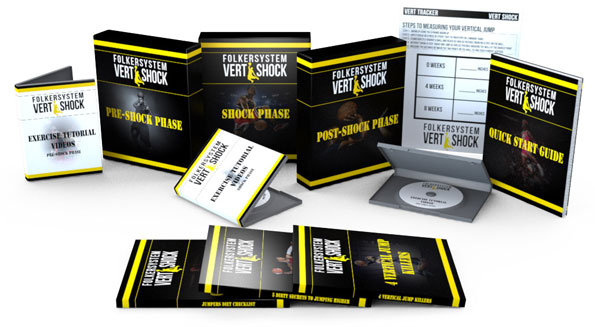
When it comes to vertical jump training in 2026, Vert Shock is still the gold standard.

Created by former professional player Adam Folker and celebrity dunker Justin “Jus Fly” Darlington, Vert Shock has helped thousands of athletes around the world increase their vertical.
It uses a training method called post-activation potentiation (PAP), which essentially “shocks” your fast-twitch muscle fibers to fire more explosively.
Vert Shock is 100% bodyweight-based, so it doesn’t require a gym, weights, or any fancy equipment — just your body, some space, and real commitment.
The workouts are challenging but well-explained, and there’s a members-only community where you can track your progress and get motivated by other athletes.
The program consists of 3 different phases — Pre-Shock, Shock, and Post-Shock, over a total of 8 weeks.
It has been used by athletes in over 78 countries.
Most users report a 6–8 inch increase after completing the program.
Pros
- No gym or equipment needed: All bodyweight training that can be done almost anywhere.
- Well-structured: Scientifically structured 3-phase system with a clear roadmap from start to finish.
- Easy to follow: Provides a clear, simple, step-by-step workout plan that helps you gradually improve.
- Beginner-friendly: The exercises are easy to learn and include clear video demonstrations.
- Short workouts: Short daily sessions that fit busy schedules.
- Fast results: Many users report noticeable gains within 4 weeks.
- Affordable: At just $67, Vert Shock is considerably more affordable than other programs on the market.
- Money-back guarantee: 60-day, no-questions-asked refund policy.
Cons
- High intensity: The Shock phase is very intense and can be overwhelming if recovery is not taken care of.
- Exaggerated marketing claims: Guaranteed 9–15″ gains is unrealistic for most. The vast majority land in the 6–8″ range.
- Repetitive: The exercises can feel monotonous.
- Focuses mostly on legs: Limited upper-body and core development.
- No strength component: For advanced athletes who already have high verticals (30″+), the lack of weight training can lead to plateau.
- Limited “why”: Lacks scientific explanation for the exercises and why you’re doing the things you’re doing.
Verdict:
Despite its over-hyped and aggressive marketing claims, Vert Shock is a legitimate, well-structured program that genuinely delivers results.
The realistic expectation, however, is 6–8 inches of gain in 8 weeks, not the marketed 9–15.
It is highly effective for beginners to intermediate jumpers looking for a straightforward, home-based routine.
But it won’t teach you the deep science of jump training, and eventually you’ll need to graduate to a more advanced program like Jump Manual or Vert Code Elite.
But for the price, the accessibility, and the speed of results – Vert Shock remains one of the most popular and effective entry-level vertical jump programs available.
Bottom Line:
If you’re a beginner and you’re looking for a proven, no-gym-needed jump program that actually delivers — Vert Shock should be your first stop.
#2 Jump Manual
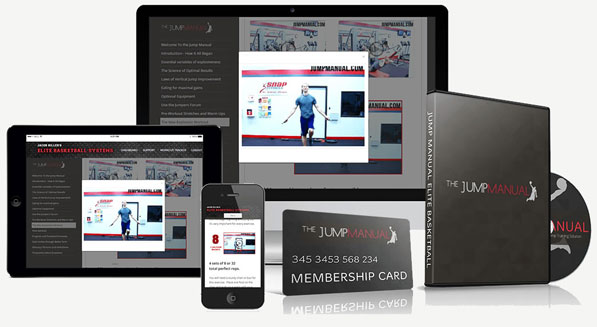
If Vert Shock is the crowd favorite, the Jump Manual by Jacob Hiller is the deep-diver’s program.

This isn’t a quick-fix system—
It’s a comprehensive, science-heavy training manual that covers every single factor that goes into improving your vertical jump—
From strength and power to nutrition, flexibility, and mental focus.
The Jump Manual has been around since 2008 and is still one of the most respected programs in the vertical jump world.
Why?
Because it doesn’t just tell you what to do—
It explains the why behind every exercise, which helps you understand your body and train smarter.
The program includes gym-based workouts, so you’ll need access to weights and equipment.
This makes it better suited for advanced athletes who have a solid foundation of training and weight lifting experience.
The personalized coaching support from Jacob Hiller is a standout feature that most programs don’t offer.
Pros
- Comprehensive training: One of the most comprehensive jump programs ever made — covers strength, nutrition, flexibility, recovery, etc..
- Support: Includes one-on-one coaching support from the creator, Jacob Hiller himself.
- Technique focused: Includes detailed guides on proper jumping form.
- Injury prevention: Slower pacing and strength focus can be easier on joints than some high-impact programs.
- High educational value: Provides in-depth scientific explanations that you keep long after finishing. Helps you gain a deep understanding of training fundamentals, not just follow exercises.
Cons
- Requires gym: Weights, squat rack, and equipment are essential — not optional.
- Not beginner-friendly: Heavy lifts require prior technique knowledge to avoid injury.
- Time commitment: Requires significantly more time per session compared to other programs.
- Steep learning curve: The sheer amount of content can be overwhelming when just starting out.
- Outdated interface: The website design and video quality are considered old and low-resolution.
- Slower gains: Progress tends to be slower than shock-based programs.
Comparison: Jump Manual vs. Vert Shock
- Jump Manual: Focuses on strength and quickness more equally. Takes longer to see results because building muscle mass takes time, but builds a higher overall “ceiling” for jump height.
- Vert Shock: Focuses only on plyometrics and quickness. Generally produces faster results and doesn’t require a gym, but can be harder on the joints.
Compared to Vert Shock, which focus more on quick, bodyweight-based plyometrics, Jump Manual is viewed as a more complete, strength-focused system for long-term gains.
Verdict:
The Jump Manual is best suited for advanced-level athletes looking to add real, lasting inches to their vertical.
The program demands strict discipline, a significant time commitment, and regular access to a gym.
Prior lifting experience is also recommended, as the exercises’ intensity and complexity can be difficult and potentially risky to navigate without a baseline foundation.
Bottom Line:
If you’re a beginner or don’t have gym access, Vert Shock is the easier on-ramp.
If you’re an experienced athlete who wants one of the most complete and science-backed programs available — and you’re willing to put in 12 weeks of disciplined, gym-based work — the Jump Manual is hard to beat.
#3 Vert Code Elite
Vert Code Elite is the newer, more modern answer to vertical jump training, and it’s quickly earned a strong reputation among serious athletes who want the most up-to-date, sport-science-driven approach available.
Created by Coach Paul Fabritz of PJF Performance, the program draws on current research in athletic performance and periodization training to maximize your jump gains.
What sets Vert Code Elite apart is its use of periodization — which means your training is broken into 12 strategic phases that build on each other over time.
Rather than hammering the same exercises week after week, the program smartly cycles intensity and volume to keep your body adapting and improving.
Unlike “quick-fix” programs that only use plyometrics, VCE uses a comprehensive approach based on Paul Fabritz’s “Explosion Pyramid,” which focuses on building a foundation of strength before layering on high-speed explosive power.
The periodized training model alternates between strength, power, and speed phases — which mirrors how elite-level college and professional athletes train.
This approach reduces injury risk while maximizing long-term vertical gains.
The program is “drip-fed,” meaning you unlock one 4-week phase at a time to ensure you don’t skip foundational steps.
A typical week consists of 5–6 working days and 1–2 days off.
Pros
- Professional-level training: Based on modern sport science and periodization principles used by elite-level athletes.
- Injury prevention: Excellent injury prevention protocols built into every phase of the training.
- Excellent presentation: High-quality instructional videos with clear, detailed coaching cues throughout.
- Superb jump mechanics: Detailed quality guides on proper technique for both one-foot and two-foot jumping.
- Recovery & nutrition: Scientifically backed protocols to help your body adapt to the high workload.
- All-around athleticism: Enhances overall athleticism beyond just jumping.
Cons
- Not beginner-friendly: More technical and complex than most programs — not for beginners.
- High cost: At $275, VCE is significantly more expensive than other programs.
- Requires gym: Fully-equipped gym with weights is mandatory.
- Extremely long: The 12-month period can feel too long for athletes seeking fast results.
- Slow results: Results take longer to appear as the periodized structure builds slowly over time.
- Lack of upper body: The program focuses almost exclusively on lower body.
- Time-intensive: Workouts are long (sometimes 90+ minutes) and require 5–6 days a week.
- Diminishing returns: Some users reported significant gains in the first 3–4 months but saw plateaus in later months.
Verdict:
Vert Code Elite is one of the most technically rigorous, comprehensively designed vertical jump programs on the market.
It’s best suited for athletes who already have a solid gym foundation, can commit to a full year, and want a methodical, science-based path to serious gains.
Bottom Line:
If you already have a high vertical (35″+), are serious about long-term growth, and want to improve your overall basketball athleticism, Vert Code Elite is likely the best choice.
However, if you are a beginner or are still establishing your vertical (20–35″), you should try other programs before getting into this one.
#4 BoingVert
BoingVert is a brand that has been in the jump training space since 2011.
It was created by two well-respected names in the athletic performance world — Shawn Myszka and Kelly Baggett, who is also the author of the Vertical Jump Bible.
Up until recently, BoingVert’s website was an absolute mess with about 20 different programs and confusing sales copy.
Currently, the vertical jump program they’re actively selling is the BEAST program, which is their main program.
Of all the vertical jump programs on the market, BoingVert has the boldest claims.
When you visit their website their headline says:
“Gain up to 15 inches in 8 weeks*” (with an asterisk of course)
Hate to break it to you, but I don’t see how a bodyweight-only program can do that in 8 weeks.
They also claim on their website that the average gain across all their programs is 10.3 inches.
I’m almost certain this is inflated—
There are many testimonials on their site claiming 5–6 inch gains, and not a single credible testimonial of someone gaining 10 inches or more.
So even BoingVert’s own curated success stories — the best-case examples they chose to display don’t get close to 15 inches.
Let me sum it up by saying BoingVert’s marketing is very questionable, to say the least.
Pros
- Comprehensive: Covers major jump factors – strength, speed, nutrition and reactivity.
- Science-based: Built on legit training principles.
- Low cost: Very affordable, often cited as a budget alternative compared to other programs.
- Strong focus on injury prevention: Eases in super slowly to minimize risk of injury.
- Good for people with knee pain: The gradual overload makes it ideal for those with jumper’s knee or patellar tendonitis.
- Educates, not just trains: Offers extensive knowledge and theory on the science and philosophy of jumping.
Cons
- Too slow: Other programs achieve similar gains in much less time.
- Misleading marketing: 15 inches in 8 weeks is an unrealistic claim.
- Poor structure / Messy layout: Information is scattered and disorganized. Requires switching between many PDFs and videos, making it hard to follow.
- High complexity: Can be too complex and overwhelming for beginners who just want simple instructions.
- Dated presentation: The program interface and overall design seem dated compared to modern programs.
- Moderate time commitment: Not the quickest workouts.
- No upper-body work: Upper body training is not included. You’d need to buy an additional program separately if you want upper body work.
Verdict:
BoingVert isn’t a bad program, but it’s not the best option for efficient or advanced training.
It’s overly complex and poorly packaged for most people.
The claim of gaining 15 inches in 8 weeks is unreliable, to put it mildly.
It’s virtually impossible for most people to gain that much in such a short period of time — especially for trained athletes.
In truth, you can expect to gain about 4-7 inches, and eventually you will need to follow it up with a more advanced program to fully maximize your vertical.
BoingVert shines for:
- People with leg/knee problems (jumper’s knee, patellar tendonitis)
- People recovering from an injury
- Younger athletes (13 and under)
But for most people, both beginners and advanced, Vert Shock and Jump Manual are easier, faster, and more practical.
Bottom Line:
If you have the budget, Vert Shock at $67 is a meaningfully better investment for most.
But if $27 is your ceiling and you’re a beginner without gym access, BoingVert is far from the worst place to start.
#5 Bounce Kit
Jordan Kilganon is hard to argue with.
The man has a 50-inch vertical, has performed some of the most jaw-dropping dunks ever recorded, and is widely considered the greatest dunker of this era.
So when he launched Bounce Kit, his 12-week jump training program, it made sense that people got excited.
The problem is —
Being an elite dunker and being an effective trainer are two very different things.
And Bounce Kit, unfortunately, highlights that gap pretty clearly.
Bounce Kit costs $77 but delivers what most reviewers describe as the bare minimum for a complete vertical jump program —
There’s no mention of form, no scientific context, and the “bonus” content offers little more than tips you could find for free online.
The program is split into 3 phases, moving from heavy strength training in weeks 1–4, to a mix of strength and explosiveness in weeks 5–8, and finally a plyometric-focused approach in weeks 9–12.
Pros
- Program dashboard: One of the cleanest, best-organized layouts of any vertical jump program available.
- Video quality: High-quality demonstrations — Jordan explains each movement clearly.
- Upper-body training: Dedicated upper-body day — rare among jump programs and great for overall athleticism.
- Lower-body strength: Excellent routine that targets all the key muscle groups involved in jumping.
- Warm-up routine: Solid preparation that gets your muscles ready and helps reduce the risk of injury.
Cons
- Training imbalance: Overemphasizes strength training at the expense of plyometrics, slowing explosive gains.
- Session length: Can run up to two hours, making it one of the most time-consuming programs on the market.
- Complexity: Requires frequent 1-rep max calculations and on-the-spot decisions, making it confusing—especially for beginners.
- Plyometric quality: Plyometric exercises are too basic to efficiently convert strength into explosive power.
- Stretching protocol: Mentions stretching but provides zero guidance on which stretches to actually do post-workout.
- Not suitable for in-season: High fatigue from heavy lifting makes it unsuitable during season.
Verdict:
Bounce Kit is not for everyone.
It throws you into the deep end right away.
There’s no gradual warm-up phase, no introductory theory guide, and no alternative exercises if you can’t access a gym.
The jump workouts can often feel repetitive, with large volumes of the same approach jumps repeated across many sets.
And the Facebook group, which promises direct access to Kilganon, has been mostly inactive.
Nonetheless, for an experienced athlete who’s already comfortable in the weight room and wants an intense, strength-based program with no fluff, Bounce Kit is a decent program.
Bottom Line:
If you’re willing to do a lot of your own research and fill in the gaps yourself, Bounce Kit can produce some results — but there are significantly better options at the same price.
Programs to Avoid
Not every vertical jump program out there is worth your time — and some can actually set you back or even get you injured.
Here’s one program that you should steer clear of in 2026:
Air Alert — Why You Should Skip It
Air Alert has been floating around the internet since the early 2000s, and at first glance, it might seem like a free and easy shortcut to a higher vertical.
But the truth is –
Air Alert is one of the worst and most outdated jump programs in history —
And it has caused a lot of knee and tendon injuries in young athletes over the years.
The program is built almost entirely on high-volume calf raises and basic jumping movements, performed at extreme frequency with very little rest between sessions.
While the idea of “more is better” sounds appealing, it’s completely wrong when it comes to vertical jump training.
Your muscles need recovery time to grow stronger — overloading them daily just leads to overuse injuries.
The program was designed decades ago, before we had a proper understanding of sports science and athletic recovery.
It has no progressive overload structure, no periodization, and no regard for injury prevention.
Simply put, it’s not worth the risk.
Pros
- Free: It’s completely free and easily accessible online — there’s no cost barrier to entry.
- Can improve endurance: The high number of repetitions does make for a good cardio workout.
Cons
- Extremely high risk of injury: High daily training volume with almost no rest days dramatically increases risk of knee/shin injuries.
- Outdated: Completely outdated methodology with no foundation in modern sports science or jump physics.
- Time-consuming: Workouts take too long — impossible to combine with basketball season.
- Wrong training focus: Trains for endurance, not explosiveness.
- Poor results: Volume is too high, leading to fatigue rather than explosive gains.
Verdict:
Being free doesn’t make something valuable.
Your knees and tendons are too important to risk on a program that has been repeatedly discredited by coaches and sports medicine professionals.
Bottom Line:
Avoid Air Alert if you care about long-term performance and joint health
There are far better, safer options available today.
Programs That Didn’t Make the Cut
Narrowing this list down to five wasn’t easy…
I tested and researched dozens of vertical jump programs to get here, and honestly, several of them are still worth your time depending on your goals, budget, or training history.
Here’s a quick rundown of the other notable programs I looked at, and why they landed just outside the top 5.
Overtime Athletes Elite Vertical Academy
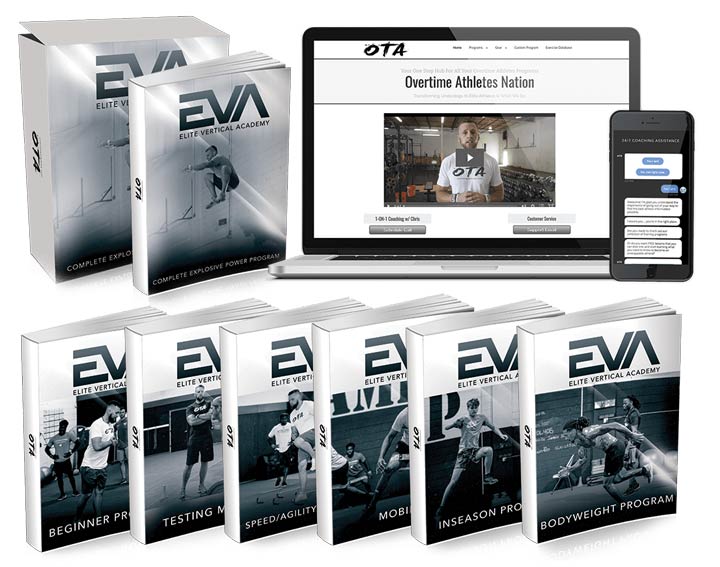
Chris Barnard’s Elite Vertical Academy (EVA) is a 16-week program built around isometrics and a “4-step” progression, with both a bodyweight and gym-based track.
It’s genuinely well-rounded, and I like that it teaches the science behind the training.
Honestly, it’s solid enough to rank if it weren’t for the crowded field. Worth a look if the top 5 don’t fit your budget or goals.
PPA Elite Remote Training

Run by Coach Chase Skinkis and Coach Tyler Ray, PPA’s Elite Remote Training pairs you with real coaches who review your lifts and jump technique on video.
I’ve seen how valuable that direct feedback can be.
The catch is the price tag.
It’s genuinely excellent coaching, but it’s a bigger investment than most beginners need to get started.
THP Strength

Isaiah Rivera and John Evans built THP Strength around fully customized programming and an unusually active coaching community.
It’s arguably the most personalized option on the market. However, it’s also seriously expensive, starting at $150 monthly, and how much true customization goes into each plan is honestly hard to verify.
Great for committed athletes with money to spend.
Nathanael Morton Vertical Jump Programs
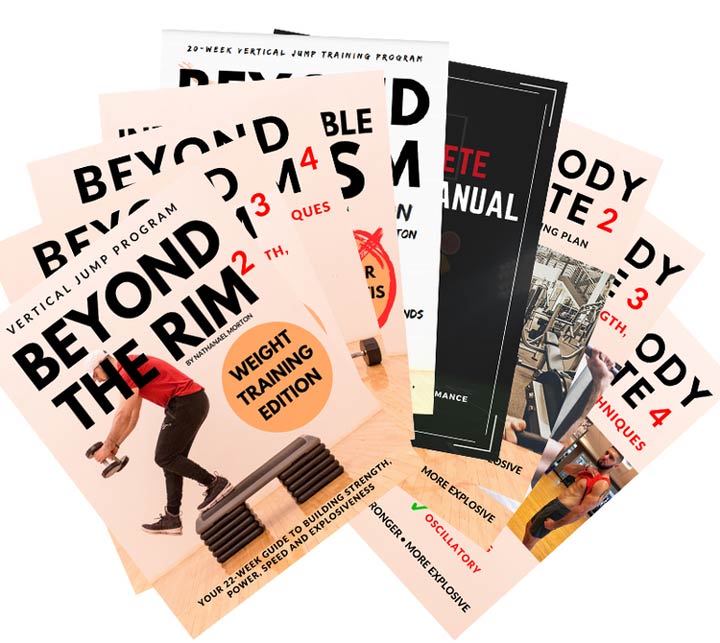
Nathanael Morton’s Beyond The Rim series covers bodyweight and weighted training with a clear focus on knee health.
His coaching knowledge is legit, and the programs are more modern than older options like Air Alert.
My issue is you’ll often need to buy multiple $75 programs just to get full-body training, which adds up quickly.
The Lost Breed Flight School

Flight School is an 8-week plyometric program from dunk influencer Anthony Lugo.
The exercise selection is actually thoughtful, but the presentation feels rushed, and there’s zero upper-body work included.
It also skips a deload week, which isn’t ideal for younger athletes.
It’s affordable, but you’ll find better-structured programs for close to the same price.
Nick Briz Vertical Jump Program
Nick Briz is known for his jaw-dropping one-foot dunks, but his $67 program doesn’t reflect that expertise.
It’s thin on structure, leaves sets and scheduling up to you, and a chunk of the content is just dunk highlight videos.
If you’re chasing one-foot jumping specifically, you’re better off elsewhere.
Knees Over Toes Guy Vertical Jump Program (ATG)
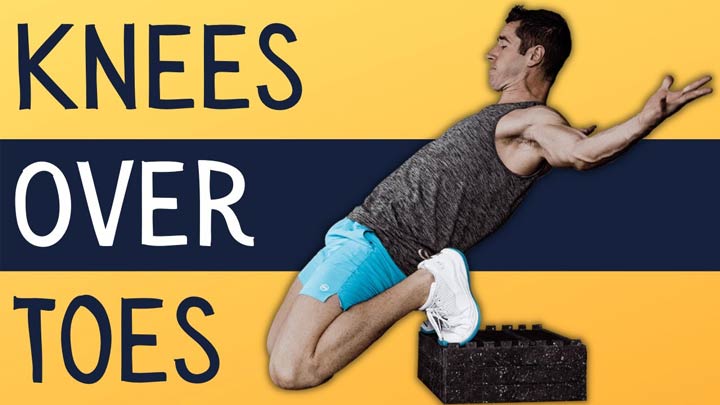
Ben Patrick’s ATG system isn’t really a jumping program first, it’s a knee-health system that happens to build a strong vertical along the way.
If you’ve dealt with jumper’s knee or tendon pain, it’s excellent. But it’s pricier than most programs here, and pure vertical gains take a back seat to joint health.
Jump Attack by Tim Grover
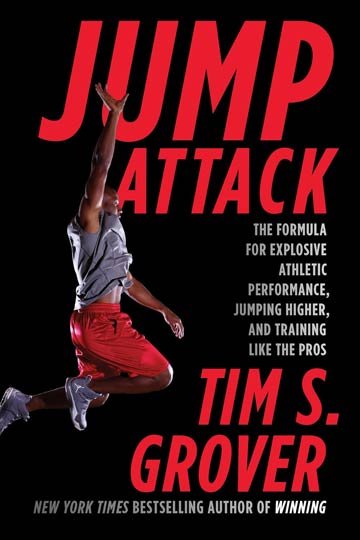
Tim Grover trained Michael Jordan, and Jump Attack is his 12-week, three-phase system built for all-around explosiveness, not just vertical inches.
It’s a legit old-school classic.
My honest take is it’s better suited to advanced athletes chasing complete athleticism than beginners who just want to add quick inches to their leap.
Vertical Jump for Ballers by Chris Staples

Chris Staples built his reputation as one of the most explosive one-foot dunkers around, and this program leans into his personal training style.
It’s a solid option if his approach resonates with you.
That said, information on the program’s actual structure is pretty limited compared to the bigger names on this list.
Final Verdict
Which Vertical Jump Program Is Right for You?
Here’s the bottom line:
The best vertical jump program is the one you’ll actually commit to.
But choosing the right starting point matters — especially if you’re a teen and your body is still developing.
Here’s a quick cheat sheet to help you decide:
- Most beginner athletes wanting fast results: Go with Vert Shock — it’s the best all-around program.
- Advanced athletes with gym access: Consider the Jump Manual for a comprehensive approach.
- Elite athletes looking for long-term, balanced program: Try Vert Code Elite for a modern, periodized approach.
- Injury-conscious athletes: BoingVert is a decent compromise.
- Advanced athletes who just want to focus on strength: Go with Bounce Kit.
- Everyone: Avoid Air Alert — it’s not worth the injury risk.
Whatever program you choose, remember that consistency is everything.
No program in the world will help you dunk if you skip workouts and don’t take your recovery seriously.
If you sleep well, eat enough, and train smart, you’ll be dunking sooner than you think.
Now the only question is — which program are you starting?
You might also like...
 Vert Shock Review – Does It Really Work? FULL Program Breakdown
- Bounce Kit Review – Why Jordan Kilganon’s Jump Program Is Far from Perfect!
- The Jump Manual Review – The TRUTH About This Program & My Results
- Boingvert Review – How the Program Works and Why It’s NOT so Great!
- How a 5’5″ Player Trained Himself to Dunk
- Basketball Shoes That Make You Jump Higher – Why It’s Total BS!
- Do Strength Shoes and Jumpsoles Really Increase Your Vertical Jump?
- Air Alert (1, 2, 3 & 4) Program Review – WARNING! Stay Away!